
The Story
Why it exists.
The beginning
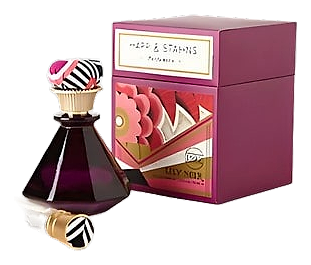
1922 Lily Sanguine is Happ & Stahns' homage to the sanguine tiger lily, a flower with petals the color of pale burgundy velvet and a scent heavy with golden pollen. Rodrigo Flores-Roux composed it. The composition places the lily at the center of the formula, and the flower reads as a serious structural element rather than a soft accent note. Around the bloom, the perfumer builds a frame of supporting materials: acacia and hawthorn for green sharpness, neroli and orange blossom for a citrus lift that reads like nectar, iris and resins for a mineral base, and vanilla for warmth without sweetness tipping into dessert territory. The lily does not behave as decoration here.
What sets 1922 Lily Sanguine apart from a conventional lily accord is how it handles the supporting cast. The flower itself is heavy, almost edible in its warmth, and rather than smoothing that intensity into something abstract, the composition leans into it. Acacia and hawthorn stack green-sharp aromatics against the bloom's softness, keeping the sweetness from collapsing into confection. Neroli and orange blossom introduce a citrus lift that reads as nectar, not cologne. Iris and resins anchor the base, giving the florals something mineral and grounded to push against.
The evolution
The opening announces itself with green brightness, acacia and hawthorn cutting through before the lily fully arrives. The composition surrenders to the flower itself once the top notes have spoken, and the neroli-orange blossom pairing acts as sunlight through pollen, golden and slightly sweet. The heart phase runs long and unhurried, the lily staying present without losing its texture. Acacia keeps the edges clean while vanilla begins its slow climb, never overtaking, always thickening the air around the bloom. As the hours pass, the resins and iris take over the architecture. The lily recedes but does not vanish. What lingers is a warm, powdery trace, vanilla over something faintly mineral, like the memory of a bouquet left on a windowsill the morning after.
Cultural impact
1922 Lily Sanguine sits within Happ & Stahns' dated catalog alongside 1842 Rosa Alba and 1933 Jasmine Riviera, each composition occupying its own year and refusing to be confused with the others. The shared logic across the line is the refusal to sand down difficult flowers into something safe, and 1922 Lily Sanguine carries that logic into territory where most lily compositions pull their punches. The tiger lily here stays heavy, stays warm, stays close to the actual experience of bending down to a bloom in summer heat, and the supporting notes are arranged to protect that intensity rather than dilute it.
The House
Happ & StahnsIn an industry where most brands chase the ephemeral, Happ & Stahns turned to the past. The American fragrance house, founded in 2010, built its identity around The Grand Tour—the once-in-a-lifetime European journey that defined cultural refinement from the late 18th century through the early 20th. Each scent anchors to a specific year, as if the perfume itself is a postcard from history, composed with quiet confidence and a scholar's devotion to period detail.
The Creator
Rodrigo Flores-RouxFlores-Roux gravitates toward bold, characterful compositions with strong sillage and distinct personalities. He excels at balancing opulent florals against warm woods and resins, and has a particular gift for citrus and neroli interpretations that feel neither precious nor fl…