
The Story
Why it exists.
The beginning
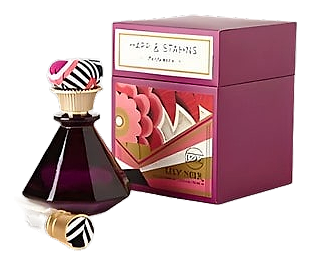
1922 Lily Noir arrived in 2013 as part of Happ & Stahns' catalog, a composition that stakes its claim on iris rather than chasing the louder florals. Each fragrance in the house's lineup anchors to a specific historical year, a conceit that treats scent as something closer to correspondence than product. The title carries weight: 'Noir' here doesn't reach for gothic melodrama. It points toward restraint, toward shadow, toward the quieter register of a journey rather than its postcard moments. The iris takes center stage in a way that rewrites the usual hierarchy. Where many compositions treat orris as a finishing note, a whisper at the edge, this one hands it the whole room and asks it to hold the floor.
What makes 1922 Lily Noir structurally unusual is the way it centers iris, a note often relegated to supporting roles, and lets it carry the entire identity. The powdery, root-beet coolness of orris stands as the central pillar, layered against carnation, a flower that brings its own quiet spice, its clove-edged warmth that threads through the composition like a slow ember. Neroli enters with bright citrus lift, lifting the heavier materials just enough to keep the whole thing from settling too low.
The evolution
The opening lands with neroli's bright lift, almost sunlit, before iris moves in and pulls everything toward cooler, powderier ground. The first impression reads green and floral, lifted and a little hesitant, as if the composition is still deciding how much of itself to show. Then carnation arrives with its clove-warmed spice, and the temperature shifts. The neroli recedes but never fully disappears. It haunts the edges, a citrus ghost that keeps the early stages from feeling too closed. As the composition settles in, the resins and balsam come forward, and the vanilla begins its slow work, sweet but never cloying, more like the smell of old wood furniture than any confection. The iris stays present throughout, a constant thread, changing shape as the materials around it shift.
Cultural impact
1922 Lily Noir occupies a particular corner of the floral landscape: the iris-forward entry from a house that treats floral notes with structural seriousness rather than decorative intent. It appeals to wearers who want florals that think before they bloom. The composition centers orris with a confidence that few iris-led fragrances attempt, letting the powdery, root-beet character of the note carry the whole identity rather than serving as accent or afterthought. Carnation and vanilla add warmth and spice without softening the iris into something generic.