
The Story
Why it exists.
The beginning
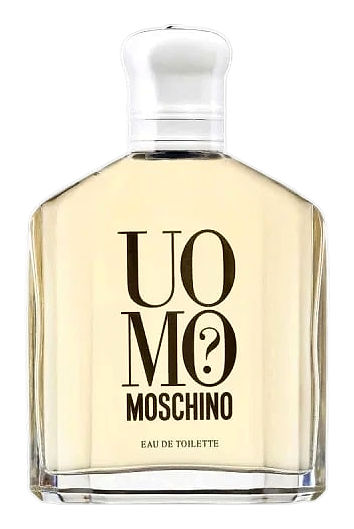
Moschino built its name on asking questions no one in luxury expected. The question mark in Uomo was the whole point, a provocation disguised as a men's fragrance, dropped into a 1998 market full of assertion and machismo. Olivier Cresp, working from the house's Milanese spirit of affectionate subversion, composed something that looked like it belonged in a department store but felt like it was winking at you from across the aisle. Uomo was designed to smell like confidence without the performance, the scent of someone who knows what they want and doesn't need to announce it.
The combination of kumquat and Brazilian rosewood is unusual, tart citrus meets warm, slightly camphoraceous wood in a way that reads as neither purely fresh nor purely spicy. Hedione amplifies the perceived citrus while adding a transparent floral lift that gives the opening its unusual glow. At the heart, clary sage brings an herbal, slightly sweet quality that softens the sharper coriander, while cyclamen adds a powdery floral dimension that keeps the whole composition from tipping into pure freshness. The result is a fragrance that refuses to be one thing, citrus that isn't light, woody that isn't heavy, floral that isn't delicate.
The evolution
The opening lands bright and a little sharp, kumquat and aldehydes creating a citrus fizz that announces itself for twenty minutes before stepping back. Cedar arrives through the heart, softening the edges as clary sage and cyclamen move in with a quiet herbal-floral warmth. The drydown is where Uomo earns its reputation: musk and cedar working close to the skin for four to six hours, never loud, never leaving. On fabric, the cedar holds longer than on skin. On some wearers, the Artemisia adds a faint bitter-green edge that others won't notice at all.
Cultural impact
Uomo by Guess arrived in 1998 as part of the brand's expansion into lifestyle products during the late 90s fashion boom. Moschino's parent company positioned it alongside clothing and accessories as a fragrance that captured the clean-cut Italian aesthetic. The woody-fresh musk category it occupies was trending heavily at the time, with consumers seeking masculine scents that smelled polished rather than aggressive. Its longevity in the market speaks to its staying power in a competitive landscape.