
The Story
Why it exists.
The beginning
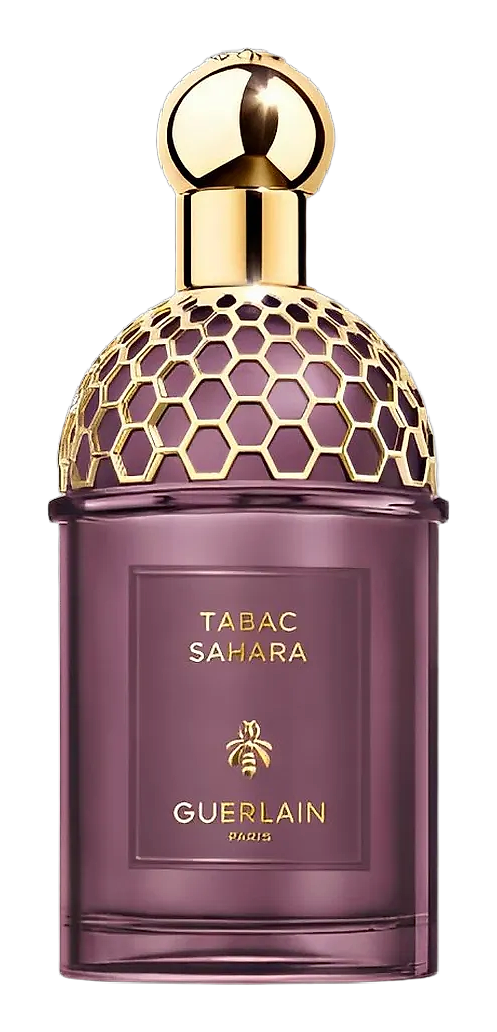
Delphine Jelk looked at the Sahara and saw contrast, extreme heat surrendering to cold night, tobacco fields at the edge of sand, smoke rising into stars. She wanted to translate that transition: golden nuances of tobacco meeting a pink raspberry note, the warmth of day bleeding into the cool clarity of night. The Absolus Allegoria collection has always been about tension, and Tabac Sahara finds its in the desert itself, a landscape that changes everything it touches.
What makes this work is the counterbalance. Raspberry could easily make tobacco feel sweet, but instead it keeps the composition bright, lifting the smoke rather than softening it. Tobacco provides the structure, not the harsh pipe-tobacco of a vintage masculine, but something golden and warm that reads modern. The ambergris is the surprise: Guerlain doesn't often reach for it in contemporary work, but here it adds a salty, animal warmth that prevents the composition from becoming purely elegant. The vanilla anchors the base, giving the drydown its lingering warmth without pushing into gourmand territory.
The evolution
The opening hits bright, more raspberry than expected, almost effervescent against a warm tobacco smoke. The first ten minutes are the surprise: most tobacco fragrances lean heavy immediately; this one lingers in pink fruit before the smoke arrives. The heart phase settles into that tobacco-and-berries territory, with the rose oil adding a subtle floral nuance that keeps the composition from tipping into masculine. Then the ambergris and vanilla take over. The drydown is where Tabac Sahara earns its name, a warm, animal, intimate finish that stays close to skin for the remaining hours. What lingers the next morning is that ambergris: salty, warm, distinctly Guerlain.
Cultural impact
Tabac Sahara has found its audience among those who appreciate tobacco done differently, not the aggressive, room-filling power of vintage masculines, but something more intimate and modern. The unusual raspberry-tobacco pairing has drawn attention within the fragrance community for its unconventional approach to a classic note. The ambergris drydown has become a talking point, some find it the defining element, others find it subtle to the point of disappearing. As part of Guerlain's Absolus Allegoria collection, it occupies a specific niche within the house's broader portfolio: not the boldest statement the collection makes, but perhaps one of the more interesting.
The House
GuerlainGuerlain stands as one of the oldest and most revered perfume houses in the world, founded in Paris in 1828 by Pierre-François-Pascal Guerlain. What began as a boutique on rue de Rivoli quickly became the preferred destination for Parisian society, attracting dandies and elegant women who sought custom-crafted fragrances. The house's influence grew to such heights that Guerlain earned the title of Official Perfumer to Napoleon III after presenting Eau de Cologne Impériale to Empress Eugénie as a wedding gift in 1853. This royal patronage marked the beginning of Guerlain's enduring association with European aristocracy, as the house went on to create fragrances for Queen Victoria and Queen Isabella II of Spain. Today, under the creative direction of Thierry Wasser, the fifth-generation perfumer, Guerlain continues to shape the landscape of fine fragrance with a portfolio spanning over 1,100 olfactory creations. The house remains headquartered at its legendary Champs-Élysées mansion, a historic monument that anchors Guerlain's position at the intersection of heritage and contemporary luxury.
The Creator
Delphine JelkJelk builds compositions around contrast and tension—warm, round, and inviting, yet never soft. Her signature leans heavily on iris, musks, and powdery facets that give her work a distinctive texture, like cashmere caught in amber.