
The Story
Why it exists.
The beginning
Thierry Wasser created L'Automne as the autumn chapter of Les Quatre Saisons, Guerlain's four-season collection of 2016. The brief was deceptively simple: translate each season's emotional register into scent. Spring needed optimism. Summer demanded intensity. Winter required austere beauty. Autumn was the hardest assignment, it occupies the same melancholic register as winter but without the excuse of cold. Wasser reached for iris as the emotional spine of this fragrance. Iris is powdery, violet-adjacent, slightly metallic in the right formulation. It occupies the autumn in-between: not the abundance of summer, not the bare confession of winter. Around that iris, he built a pyramid of citruses to open, cedars to anchor, and vetiver to deepen. The base layers in moss, patchouli, and tonka bean, a Guerlain signature move, but one deployed here with restraint rather than abundance.
What makes L'Automne's structure interesting is the tension between cool and warm. The citruses open sharp and clean, almost cold. The iris that follows is powdery and floral but carries a cool undertone. Then the cedars arrive, dry, slightly resiny, and the vetiver, earthy and root-like, pulling the whole composition toward something damp and forest-floor. Only at the very end does the tonka bean appear, soft and vanillic, finally introducing warmth. It's the arc of autumn itself: cold mornings, crisp afternoons, then the slow warmth of the last light before dark. The moss and patchouli in the base are the olfactory equivalent of fallen leaves on damp earth, they don't smell like summer.
The evolution
The opening is citrus and immediate. Bergamot or a similar citrus brightens the first five minutes with something that feels almost cold, autumn morning air, not summer evening. Within ten minutes, the iris arrives. Powdery, cool, that violet-dusted quality that makes iris feel like pressed flowers in an old book. The cedars follow, dry and woody, anchoring what could have been too light. Vetiver and moss settle in together around the forty-minute mark, giving the composition its earth component, damp soil, fallen leaves, the smell of a forest edge in October. Patchouli adds its dark, slightly sweet spice. The tonka bean doesn't appear immediately. It unfolds over hours, warm and almost edible. This is when L'Automne becomes something unexpectedly tender, a house not known for softness reveals a soft center. The sillage drops to intimate. You lean in and catch it. The evolution goes from cool and melancholy to warm and close over eight to ten hours. On fabric the next morning: a quiet trace of tonka and moss, sweet and slightly powdery, like a memory of warmth.
Cultural impact
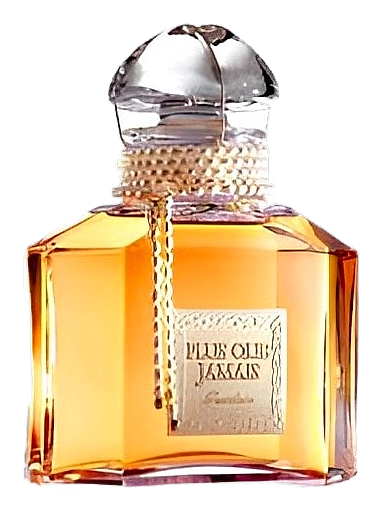
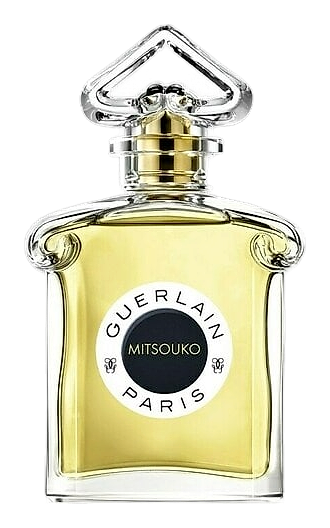
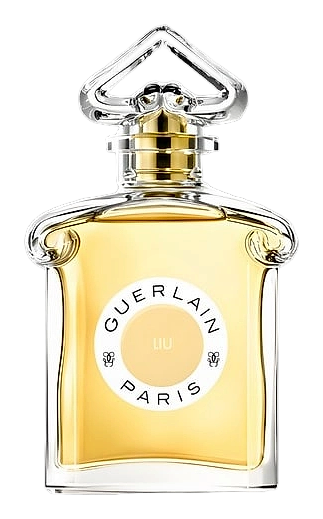
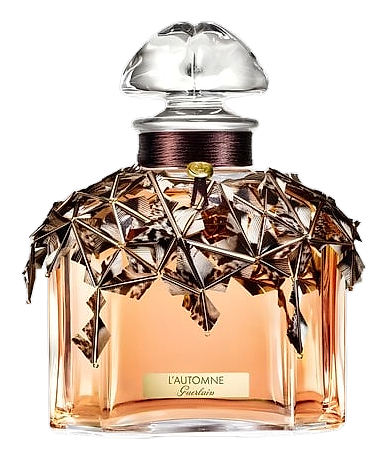
Part of a four-fragrance seasonal collection released in 2016, L'Automne exists in limited quantity: twenty-two bottles of 500 ml each, distributed through Guerlain's boutique network. The Baccarat quadrilobe flacon, designed by Janaïna Milheiro, is itself a collector object, a piece of perfume as sculpture. Wearers describe it as the fragrance of someone who arrives without needing to be noticed: refined, slightly melancholic, secure enough in its quality to stay close. It fills no room. It fills the space immediately around you, and that turns out to be enough.