
The Story
Why it exists.
The beginning
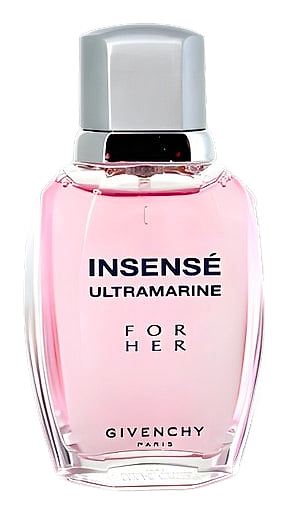
Insense Ultramarine works on two levels. "Insense" points to incense and intensity. "Ultramarine" is the deep blue of open water. Together, they sketch a fragrance built around marine-green-floral structure, a mineral-tidal opening from citrus and green notes, a heart where seagrass lifts the rose into something unexpected, and a drydown that keeps warmth close for hours. The 2004 Givenchy release sits in the house's tradition of contrasts: elegant but unafraid to wander into something slightly unfamiliar. It's not a safe aquatic. The seagrass gives it a tidal depth thatcitrus alone can't produce.
The seagrass is the structural pivot here. Most aquatics rely on synthetic marine molecules to simulate the ocean, clean, impersonal, interchangeable. Seagrass operates differently. It carries an organic, slightly green mineral quality that bridges the bergamot-grapefruit opening and the rose-orchid heart without either side collapsing into the other. The rose doesn't go sweet. The green doesn't go sharp. The cedar-amber base anchors the whole composition, turning what could read as trendy aquatic into something that holds still and holds on. This is the difference between a fragrance that smells like the ocean and one that smells like being near it.
The evolution
The opening hits sharp and clean, citrus bright, green leaves just slightly bitter, like coastal wind through something growing. Thirty minutes in, the rose arrives. It doesn't come alone. Seagrass carries it sideways, into tidal territory, keeping the florals honest instead of sweet. The orchid is quiet here, more texture than note, a waxy, almost green-humid presence that makes the rose feel less staged and more found. Cedar starts building underneath, pushing the composition away from pure florals toward something woodier, more grounded. The drydown settles into white musk and amber, warm and powdery, close to the skin. This is where the marine greens and florals resolve into something mineral rather than aquatic, a warmth that stays for the next 4-5 hours on most skin. It's not trying to fill a room. The sillage is moderate, the presence quiet. The kind of fragrance someone notices only when they're already beside you.
Cultural impact
Released in 2004 at the height of the aquatic trend, Insense Ultramarine carved a quieter path. Where most aquatics leaned into synthetic marine molecules for a clean, impersonal ocean effect, this one reached for seagrass, an organic, mineral-rich material that gave the marine accord actual depth. It's the kind of fragrance collectors talk about in the past tense, which says something. The house positioned it as a study in contrasts, and the 2004 launch delivered something unusual: a marine-floral that didn't smell like everyone else.