The Story
Why it exists.
The beginning
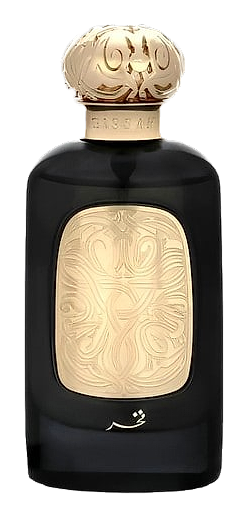
Fakher launched in 2021, a debut that arrived with intention rather than noise. There's a posture here, something deliberate in how the composition holds its shoulders: dense on the open, smoky at the edges, and structured around notes that have carried weight in perfumery for centuries. The opening carries a sharp, almost metallic lift from saffron, and it cuts through immediately, setting a tempo the rest of the fragrance seems content to follow rather than fight. As that initial brightness settles, rose enters not as a soft floral gesture but with a leathery undertow, pulling the saffron's metallic edge into something warmer, more textured. Cedar shows up early in the heart, giving the mid-phase a dry, woody grain that acts as scaffolding. What makes Fakher interesting is restraint.
What makes Fakher interesting is how it uses incense as a structural device, not just an accent. The resin appears in the top notes and returns in the base, framing the cedar, rose, and saffron in between. Pink pepper and lemon open with brightness, but the incense underneath is already turning the volume down, preparing the ear for something quieter and older. It's a dual-incense architecture: one note doing the work of two, appearing in two different registers across the pyramid. Saffron threads through the heart without dominating, letting rose and cedar carry the conversation. The oud in the base is treated like a seasoning, not a statement.
The evolution
The first fifteen minutes are a negotiation. Lemon brightness pushes forward, pink pepper adds a dry warmth, and incense threads underneath like smoke caught in a draft. The opening reads as almost contradictory, a citrus-spice greeting from a composition that has no interest in being easy. By the thirty-minute mark, the lemon has softened and saffron arrives. This is where the composition finds its center of gravity. The rose is present but never sweet, more structural than romantic, backed by cedar that gives the heart a dry, almost architectural quality. Two hours in, the base has settled in. Patchouli arrives, earthy and grounded, and the oud becomes legible, not as a sharp animalic statement but as something more rounded, a warmth that lives in the skin. The incense that bookended the composition returns in deeper form, smoky and resinous, and it stays. Six hours later, what's left is a close, smoky, woody warmth, the kind of trail you catch on a scarf the next morning. It doesn't project far by the end, but it doesn't need to.
Cultural impact
Fakher reads as a study in restraint within a category that often leans on volume. The oud here behaves like a seasoning rather than a centerpiece, present and recognizable, but folded into the composition rather than dominating it. Incense carries much of the structural weight, threading a resinous, slightly sweet warmth through the base that keeps the drydown grounded and smoky. The rose-saffron-cedar heart is where the composition does most of its talking: rose arrives with a leathery undertow, saffron lends that almost metallic, slightly bitter brightness at the top, and cedar weaves a dry, woody grain that gives the mid-phase its shape.