
The Story
Why it exists.
The beginning
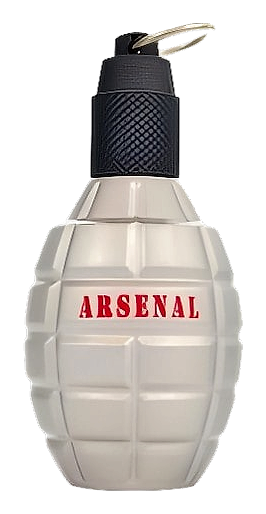
Gilles Cantuel built his career in the competitive French perfume market through consistent, thoughtful work. By 1996, when he created Arsenal, Cantuel had already released several fragrances including Créature in 1985 and Folie de Créature in 1992. The collaboration with Arsenal Football Club represented something new, a fragrance tied to a specific identity rather than a general concept of masculinity. The brief wasn't about spectacle. It was about capturing the energy of those who perform without performing, who show up and deliver.
What makes Arsenal unusual is its refusal of the obvious. A sports club fragrance could have leaned into citrus and mint, the olfactory shorthand for freshness and athleticism. Instead, Cantuel chose lavender as the structural backbone, an herbaceous note more associated with Provençal fields than football pitches. The anise threading through the heart adds a subtle bitterness that lifts the lavender out of grandmother territory and into something drier, more complex. It's a composed choice. The kind of move that shows a designer thinking about what the name deserves rather than what sells the bottle.
The evolution
The opening arrives with green citrus clarity, lemon and bergamot meeting galbanum in a brief, bright flash. No drama. The mandarin orange adds a soft sweetness that keeps it from sharpening. Within twenty minutes, the anise asserts itself, bringing a faint licorice edge that separates this from standard aromatic fougères. Then the lavender takes over. It doesn't explode, it settles. The violet leaf note contributes a crisp, green bite that prevents the composition from becoming too soft. The drydown is where Arsenal earns its reputation. Vetiver anchors everything with earthy, smoky depth. The woody notes provide warmth without sweetness. The incense lingers quietly, close to the skin, present but never heavy. On fabric, the vetiver can persist into the next day.
Cultural impact
Arsenal arrived at a moment when men's fragrance was dominated by the loud and the aggressive. Designers leaned into marine notes, bold citrus bursts, and heavy woods meant to announce presence. Arsenal went the other direction, composed, herbal, and quietly confident. The lavender-anise combination reads as distinctly 90s now, but within that context, it represented restraint rather than risk-taking. What keeps it relevant is its refusal to shout. In an era of fragrances designed to fill rooms, Arsenal was designed to stay close. That's a position that resonates differently in 2024 than it did in 1996.