The Story
Why it exists.
The beginning
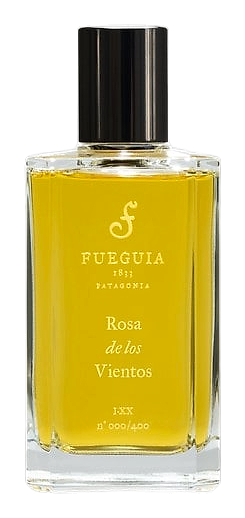
Rosa de los Vientos takes its name from the compass rose, the instrument sailors consulted when the world's winds turned unpredictable. Julian Bedel designed it for Fueguia 1833's Destinos collection in 2018, a line built around the theme of destinations. The compass rose pointed outward; the fragrance works in a more contained register, drawing on a classical palette of damask rose, sandalwood, and amber. In a catalog stacked with native Patagonian ingredients, this one makes no apologies for its unapologetically classical profile. A triptych from the old world, rendered by a house that has made the old world feel like new territory. The rose here is the damask rose, a cultivar with centuries of perfumery behind it, the kind of flower that carries weight before you even unscrew the cap.
What's striking about Rosa de los Vientos is the restraint. Three notes, a clear triangle. The sandalwood sits in the middle, bridging the rose above and the amber below. Damask rose is a cultivar with centuries of perfumery behind it. Pairing it with sandalwood pulls it back toward something older, less prettified, the kind of rose that doesn't try to charm you so much as quietly impress itself on the air around you. The amber base is what stops the composition from feeling like a study instead of a perfume, lending a warmth that gives the whole structure its weight.
The evolution
The rose opens wide, almost jammy, the sweetness of petals with the green still on them. It smells generous, like a bouquet that hasn't been trimmed down yet. Once the sandalwood starts to surface, it arrives not as a sharp wood but as a creamy layer that softens every edge of the rose. The two become hard to separate. The petals feel drier now, less candy and more like dried rose petals in a wooden box. As the hours pass, the amber has built underneath, warm and slightly resinous, catching the sandalwood's cream and turning it golden. The rose never fully disappears. It thins out, folds into the base, becomes more suggestion than statement. On skin the composition sits close rather than broadcasting, a moderate presence that rewards the wearer more than the room. A scent that prefers the second sniff to the first impression.
Cultural impact
Rosa de los Vientos reads less as a statement floral and more as a scent that happens to feature rose. It's the kind of composition that wears well on people who find most rose fragrances too sweet or too loud. The rose here never overwhelms; it shares the stage with sandalwood and amber, three notes arranged so that no single ingredient dominates. It's a rose for someone who thinks guernsey sweaters look better than silk scarves, a composition that favors texture and warmth over ornament. What makes it quietly compelling is the way it borrows from classical perfumery but doesn't feel bound by it. The damask rose carries the lineage.