
The Story
Why it exists.
The beginning
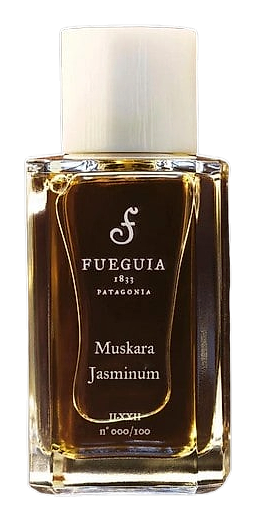
Fueguia 1833 is a house whose work centers on South American botanicals, rendered through the medium of fragrance rather than the herbarium. The muskara jasmine at the heart of Muskara Jasminum is one of those materials the line has built its reputation around: a jasmine unlike the familiar grandiflorum of European perfumery, carrying a musky, almost leathery density that gives it a distinctly different gravity on the skin. Where conventional jasmine compositions lean on sweetness and indolic brightness, this one leans inward, toward the heavier, more shadowed facets the flower can offer when treated with respect. The result is a composition that feels less like a bouquet and more like a single, slow-breathing bloom held close to the face.
The material itself is a special blend of jasmines extracted with care, chosen for the indolic and musky qualities that set muskara apart from the more familiar expressions of the flower. Because heat-based processing tends to flatten those heavier facets, the extraction philosophy preserves the raw character of the petals rather than smoothing them into a generic floral absolute. What emerges is an absolute with a faint green-animal edge, a density and a slightly feral undertone that many commercially processed jasmines lose along the way.
The evolution
When Muskara Jasminum entered the Fueguia line, it arrived as one of the more distinctive offerings in a catalog that tends to favor unusual botanicals. On first encounter, the opening registers as cooler and quieter than most jasmine fragrances, almost camphoraceous, before the dense, creamy heart unfurls across the skin. In the hours that follow, the bloom settles into a softer musk base, shifting the overall character from something austere and considered to something intimate and lived-in. The drydown carries a faintly honeyed, skin-like warmth that rounds the composition into a quieter, grown-up jasmine. Today it reads as one of the line's most assured statements of raw material confidence, a fragrance that has found its own pace and stays there.
Cultural impact
Muskara Jasminum occupies an unusual place within Fueguia 1833's catalog, and within the broader landscape of contemporary jasmine perfumery. The house has consistently championed botanical materials drawn from across South America, and this composition stands as one of the clearest expressions of that curatorial philosophy in floral territory. Jasmine, a flower most often associated with Grasse, India, and the Mediterranean, appears here in a distinctly different guise: heavier, muskier, more animalic, and unmistakably its own thing rather than a variation on a familiar theme.