The Story
Why it exists.
The beginning
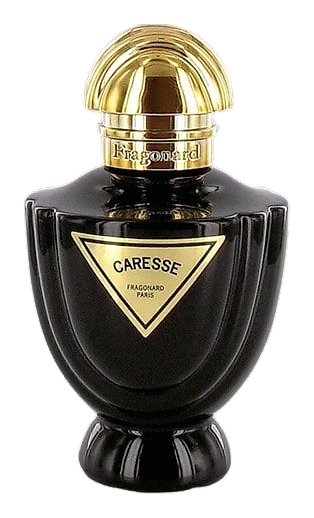
Caresse arrived in 2008 as a deliberate echo of something much older. The name and the bottle shape belonged to a 1929 Fragonard composition, a powdery, spicy-floral that had long since disappeared from the catalogue. Rather than reissue a ghost, the house rebuilt it from the ground up, keeping the silhouette and the sentiment while rewriting the formula for contemporary tastes. What emerged was a fruity-floral: apricot, peach, orange blossom, jasmine, rose, and mandarin arranged in a way that feels less like nostalgia and more like a memory you didn't know you had.
The original and the 2008 recreation share a soft powdery sensibility, a romantic register that reads more like a gesture than a declaration. The newer version trades a certain mossy nostalgia for fruit and white florals, something sunnier and more immediate, though the powdery softness carries through both iterations. That sweetness without sharp edges, the sense of comfort rather than performance, links them across decades. The recreation feels more edible, more wearable, less haunted by old-world weight, yet the structural elegance survives in the drydown.
The evolution
Mandarin and apricot open the composition, bright and slightly fuzzy, like biting into fruit still warm from the tree. That citrus-fruit lift persists through the opening phase, loosening its grip only gradually as peach and a generous pour of orange blossom move into the center stage. Jasmine and rose appear not as sharp soloflores but as a blended sweetness, creamy and slightly soapy, the way white florals read when they're softened by fruit rather than standing alone. As the composition settles, it reveals a warm, slightly lactonic softness, powdered but not chalky, intimate rather than declarative. The woody and musk base notes anchor the sweetness without darkening it, keeping the scent skin-close and warm rather than theatrical. There's something quietly confident about how the white florals and fruit share the stage without competing, each softening the other's edges.
Cultural impact
Caresse sits comfortably in the category of pretty, approachable florals, the kind of composition that wears well without demanding attention. It draws wearers who want something unfussy and romantic, a daytime scent that reads soft rather than bold. The composition prioritizes wearability and charm, a daily pleasure rather than a special-event performance. Within any broader collection of French floral perfumery, Caresse represents a softer expression, a composition that leans into sweetness and skin-closeness rather than spice or smoke.