
The Story
Why it exists.
The beginning
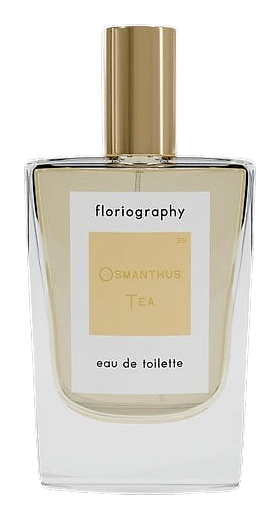
No. 39 Osmanthus Tea is the work of Jo Shaw, the perfumer behind Floriography. Sources differ on the exact launch year, with one placing it in 2019 and another in 2020, so the timeline remains a little unsettled. What is clear is the concept behind the house: a numbered catalog of compositions, each one a coded message designed to recreate a specific place, texture, or moment rather than follow a traditional floral blueprint. The numbering is intentional, almost archival, and No. 39 fits squarely within that logic. The name itself conjures a particular kind of stillness. Imagine sitting beneath flowering osmanthus trees in a valley, the air carrying both their scent and the warmth of green tea. It reads as a kind of bottled landscape, a translation of a place into something you can wear.
What makes this composition interesting is what osmanthus actually does on skin. It's one of perfumery's most unusual florals. It doesn't behave like jasmine or rose, where the flower itself is the entire point. Osmanthus reads as fruit, specifically the warm, fuzzy sweetness of apricot skin, sun-warmed and slightly sticky. There's a softness to it, a sunlit, almost confectionary quality that sits somewhere between floral and edible. Pairing that with green tea is a clever structural move.
The evolution
The opening belongs to the green tea note, and it arrives with a specific kind of clarity. There's a vegetal, almost grassy brightness to it, the kind of green that feels alive rather than abstract. The osmanthus enters early but keeps its distance, a golden sweetness woven through the sharper green. Together, they read less like two separate accords and more like a single impression, the way a real cup of tea might carry a faint floral note from nearby blossoms. As the composition settles, the balance shifts. The tea begins to recede, and the osmanthus opens up, revealing more of that apricot-adjacent fruitiness. This is where the fragrance feels most itself. The jasmine adds a soft, slightly indolic lift at the edges, a white floral hum that keeps the sweetness from collapsing into something one-dimensional.
Cultural impact
It wears as a quiet, unfussy composition that avoids the gourmand territory many stone-fruit fragrances stumble into. The clean musk base keeps it grounded, and the restraint of the overall structure gives it a kind of editorial sensibility. It sits closer to the thoughtful, concept-driven end of floral perfumery than to the louder, more decorative mainstream. The fruit reads as natural rather than sweetened, the tea keeps everything in proportion, and the musk ensures it never overwhelms. There's a discipline to the composition that rewards attention, the kind of scent that reveals more the longer you sit with it.