
The Story
Why it exists.
The beginning
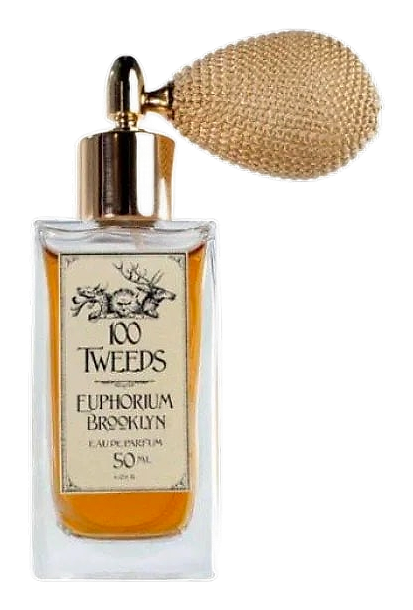
100 Tweeds draws its name from a tincture of 100 tweeds, the conceptual hook behind what is one of the most densely constructed compositions from Euphorium Brooklyn, the house founded by perfumer Stephen Dirkes. The fragrance takes that idea of layered dye-baths and translates it into scent: a single composition built from over forty raw materials, each one contributing a thread of color to the final blend. The official accord list reads like a survey of northern terrain, heather and heath bracken, lichen and moss berry, honey and balsam peat, a landscape shorthand for what the bottle actually contains.
What's unusual here isn't any single material. It's the sheer count. Over forty notes in one composition, from castoreum and indole to katrafay and ajowan, from calamus and wormwood to tolu balsam and white oud. The herbal elements press against smoky resins and balsamic bases until the boundaries between them grow soft, and the whole reads as one dense accord rather than a sequence of distinct soloists.
The evolution
The first spray hits hard. Galbanum and oregano crack open green and almost medicinal, cut by the bitter lift of wormwood and the dark resin of calamus. Indole and castoreum are already stirring underneath, lending a slightly fecal, animal edge that keeps the green from feeling purely vegetal. As the opening settles, the herbal sharpness begins to recede and the middle takes over: a thick weave of oakmoss, labdanum, vetiver, and tobacco, with honey sweetening just enough to keep it from going purely austere. The oakmoss here reads dark and damp, almost root-like, while labdanum contributes a sticky, amber bitterness that rounds the blend. Tobacco arrives dry rather than smoky, a leaf-and-cedar note that adds warmth without ash. The transition is gradual, the green thinning into something woodier and more contemplative.
Cultural impact
100 Tweeds has earned a following among wearers who describe it in outdoor terms: moorland, bracken, smoke, tincture. The vocabulary around the fragrance tends to be geographic and seasonal, less about sweetness or freshness and more about cool air, wet heather, and the mineral smell of stone. Fans reach for notes like peat and moss when describing what they smell on skin, and the composition has become a familiar reference in conversations about herbal and resinous niche perfumery. People who love it tend to associate it with cooler months and treat it as a statement, something layered into a rotation rather than worn as a daily signature.