The Story
Why it exists.
The beginning
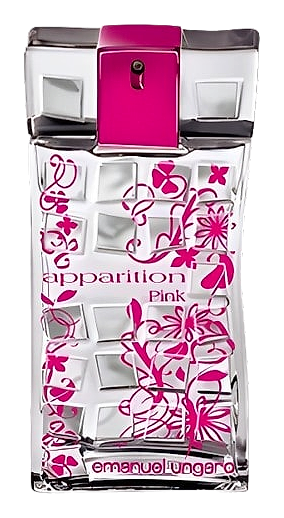
Thomas Fontaine created Apparition Pink in 2010 as a fruity-floral expression of Ungaro's theatrical spirit. The name itself, Apparition, suggests something that appears suddenly, grabs attention, then leaves an impression. The pink aesthetic ties to the house's palette, echoing the vibrant hues that have long defined Ungaro's dresses. The composition blends sweet fruit notes with floral heart notes, creating a scent that speaks to both playfulness and drama. Fruity-floral expressions have always had a place in the Ungaro universe, and this creation honors that tradition while adding its own contemporary chapter.
The hyacinth note brings something unexpected to the composition. Its green, slightly indolic character carries a sharpness that the fruity sweetness has to work around. That tension between the berry heart and the almost aquatic green of hyacinth creates an interesting counterpoint. The sweet raspberry at the center meets the zesty yuzu and the warm spiky quality of pink pepper, resulting in a fruity-floral arrangement that sidesteps more conventional pairings.
The evolution
The opening hits bright and tart, yuzu and pink pepper arriving together, with pear adding a sweetness that softens the citrus without diluting it. That initial burst transitions smoothly before the heart takes over: hyacinth and raspberry emerge, rose joining quietly in the background. The hand-off is seamless, no awkward gap where one phase dies before the next arrives. As the fruity-floral heart settles, sandalwood and iris arrive to anchor everything. The drydown is softer, powdery in places, with the synthetic lift never fully disappearing, it just reshapes itself into something quieter. The progression flows naturally from the bright opening through the floral heart to the grounded finish.
Cultural impact
Apparition Pink arrived in 2010, a period for Emanuel Ungaro that continued the house's creative trajectory. The launch brought a fruity-floral composition into the market with some notable choices. Yuzu, a Japanese citrus fruit, found its way into the formula, adding a sharp brightness to the opening. The fruity-floral category had long relied on certain note combinations, and this scent introduced alternative pairings that felt fresh at the time. The overall character leaned into the house's established aesthetic while offering something new for those seeking fruity-floral options with a distinctive point of view.