
The Story
Why it exists.
The beginning
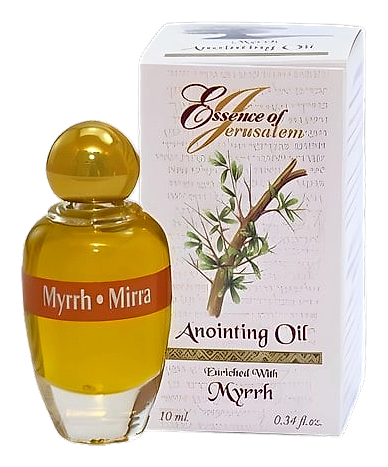
Myrrh Anointing Oil is part of Ein Gedi's devotional line, fragrances built around the same myrrh referenced in ancient Near Eastern texts. Released in 2017, it draws on a resin with deep roots in ritual practice. The composition stays narrow on purpose, letting the resin lead while a tight core of supporting notes keeps it from going monotone. There is no citrus to lift the top, no synthetic musk to stretch the base, no praline sweetness to round the edges. What you smell is what was put in the bottle. Myrrh opens dry and slightly bitter, almost medicinal, then warms as the spices weave in. The olive note at the heart pulls everything back toward something edible and vegetal, grounding the resin without softening it.
Three layers, four notes total, with myrrh and spice opening over an olive heart and a base of pure oily resonance. That restraint shapes every phase of the wear. Ein Gedi treats scent as a link to ancient material culture, choosing resins and oils with deep scriptural weight. The olive note grounds the composition in something tangible and regional, a reminder of the botanicals that grow in the land of the Bible. The structure is linear in the sense that nothing disappears, but each phase brings a different facet of the same material to the surface. The opening reads sharp and resinous.
The evolution
The opening hits immediately and does not ask permission. Myrrh arrives warm and bitter, with a dry spiciness underneath that reads almost medicinal at first. There is nothing bright or juicy to soften the landing. Within the first few minutes the resin deepens, turning darker and slightly smoky as the spices integrate and the olive note surfaces. The middle phase is where the composition becomes recognizably itself, an oily, earthy warmth that feels less like a perfume wearing on skin and more like skin itself has changed. The olive carries a faint green bitterness that keeps the resin from going cloying, and the spices lose their sharp edge, melting into the oily base rather than sitting on top of it. On clothing the projection reads louder and lasts longer than on skin, picking up fabric and holding the heavier facets of the resin well into the following day.
Cultural impact
It carries an archaic weight that most contemporary fragrances avoid. Wearers drawn to it tend to appreciate ritual and the sensory character of raw resin, finding something honest in a formula that does not try to flatter the wearer. It sits comfortably alongside church incense and Middle Eastern attar traditions and reads as a deliberate contrast to designer releases that chase mass appeal. Reviews describe it as archaic and melancholic, with some noting a coarse, machine-oil edge.