The Story
Why it exists.
The beginning
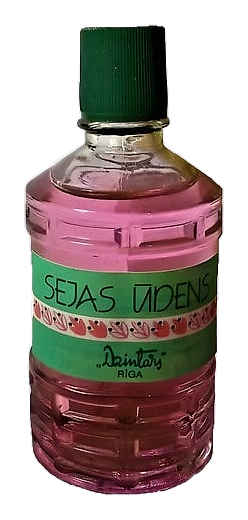
Sejas ūdens, a Latvian term, evokes something between a splash of cologne and a light tonic applied after washing. Dzintars released it in 1956, toward the later stretch of a period when the Riga factory produced fragrances for domestic audiences. The name suggests something functional, almost quotidian. But the composition pulls toward the intimate: floral, musky, rose-centered, with that subtle animalic undertone that signals skin rather than distance. The rose here isn't the bright, dewy variety favored in modern perfumery; it leans darker, heavier, carrying the bruised sweetness of petals left too long in a bowl. There's a powdery softness threaded through the heart, something that recalls face powder or the faintly sweet residue of a compact touched repeatedly through the day.
What makes Sejas ūdens worth noticing is its honesty about what rose can do when it's allowed to skip the bright, modernizing tricks. No Calabrian bergamot shouting over it. No green stem cutting through. The floral heart and musk base are given the full stage, which means the rose deepens into something almost confectionary, then settles into a skin-close musky drydown that feels less like perfume and more like the smell of someone who's been wearing it all day. It's a 1956 composition that refuses to apologize for being 1956.
The evolution
On skin, Sejas ūdens opens with a soft floral warmth that's less an entrance than a settling-in. The first while reads as a blurred bouquet, where rose and unnamed florals share space without announcing which is which. Then the rose consolidates. It deepens from fresh to dense, gaining a faint spiced edge that pulls the composition inward. The musk arrives underneath, and the whole thing shifts register, from something you smell to something you wear. The drydown stays close, musky, with that animalic softness that reads more like warm skin than perfume. What remains over time is a faint powdery trace, barely there, the kind of scent someone catches only when they're near. The progression is gradual rather than dramatic, each phase handing off to the next without sharp transitions.
Cultural impact
Sejas ūdens carries a distinctive vintage character, the kind of fragrance that feels rooted in a specific moment without being locked to it. It's a rose perfume in the older sense of the word, the sort that leans into density and warmth rather than the airy, transparent roses that have come to dominate contemporary launches. For those who encounter it, there's often a quality of recognition, a sense that this fragrance belongs to a familiar domestic tradition, one where perfume was applied as part of a morning routine rather than saved for evenings out.