The Story
Why it exists.
The beginning
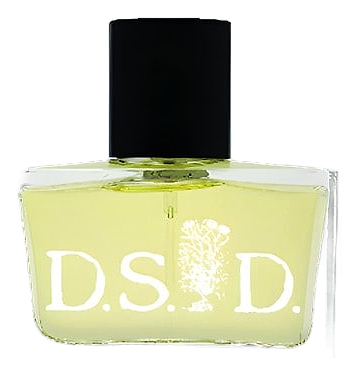
Silent Grove began as a private pursuit for David Seth Moltz, a self-taught composer working outside the formal fragrance industry. The name itself signals intention: silent rather than quiet, grove rather than forest, something deliberate and restrained. Moltz reached for materials that could convey the feeling of a green place without overwhelming it. Petitgrain provides the bitter-green character of citrus leaves, offering a botanical sharpness that reads more herbal than sweet. Cedar contributes a vertical quality, the sense of standing beneath trees as light filters through. The fragrance operates in a register that never demands attention. It was composed to be present without announcing itself, to occupy space without dominating it.
What makes Silent Grove distinctive is not any individual ingredient but the way its structure holds together without a heavy foundation. Most fragrances depend on substantial base materials, woods, musks, resins, to anchor them. Silent Grove builds instead on white lotus, white musk, and grass. These are whisper materials, delicate and fleeting on their own. Yet the combination creates something that neither fully announces itself nor completely fades. The result occupies a middle register: present enough to be noticed, modest enough to never dominate a room.
The evolution
The opening arrives fast, petitgrain and key lime cutting bright and clean, almost astringent. There's a sharpness here that some people read as clinical and others read as exhilarating, depending on what they're hoping for. It doesn't linger. Within fifteen minutes, the citrus lifts and something softer takes its place. The heart is where Silent Grove earns its name. White tea and linden emerge together, creating a cool, slightly sweet atmosphere that feels like standing under a tree at the edge of a clearing. The rose otto is barely there, not a rose so much as a whisper of rose, adding a barely-there floral layer that prevents the whole thing from going too austere. This phase lasts the longest, two to three hours of quiet green floral without ever getting heavy. The base is where the discontinued status becomes understandable. White lotus and white musk are subtle materials, and grass adds a green finish that fades gracefully but doesn't last. By hour four, on most skin, Silent Grove is a memory, a skin scent, close and intimate.
Cultural impact
Silent Grove occupies an unusual position in the niche fragrance landscape. For those who discovered it, the fragrance functions as a reference point, a scent that does one specific thing and does it without compromise. It delivers green in its most honest form, clean and unsweet, without relying on warmth or sweetness to invite wear. The white tea and linden give it a distinctly botanical quality, something that reads as garden-fresh rather than constructed. Community discussions frequently reference its restraint, noting that it performs differently from fragrances built on amber or gourmand notes.