
The Story
Why it exists.
The beginning
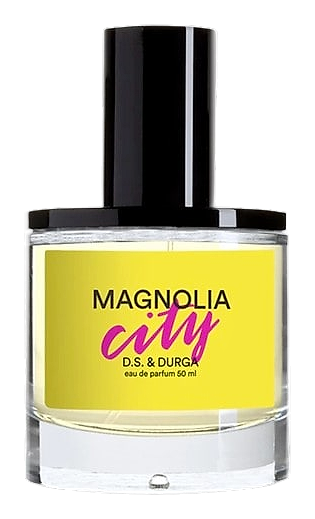
David Seth Moltz built Magnolia City around a specific plant: Magnolia brooklynensis, the yellow magnolia that blooms in Brooklyn parks and on certain street corners. Not just any magnolia, the one that actually grows here. The idea was to translate the feeling of that first warm week in April when the trees along Flatbush Avenue catch up and the borough turns briefly, absurdly beautiful. For DS&Durga, this is what fragrance archaeology looks like: excavating specific cultural moments, not sentiment. Brooklyn as sensory memory.
What makes this work is the green backbone. Moss phlox and galbanum are not typical magnolia companions, they're the weedy, aromatic stuff that grows around the base of the tree. Including them means the composition stays grounded instead of floating into generic floral territory. The narcissus and orchid in the heart add a certain daffodil-like sweetness that reads more field than bouquet. White musk in the base keeps everything skin-close and intimate rather than projecting across a room.
The evolution
The opening hits green and citrus simultaneously, galbanum's resinous bite softened by bright lemon. Within minutes the magnolia emerges, not the waxy Southern kind but something yellower and more alive. The narcissus and orchid take over the middle, extending the floral phase into something slightly weedy, slightly sweet. The drydown is where it gets quiet: cherry wood and white musk settle close, staying intimate for the remaining hours. The sillage remains moderate throughout.
Cultural impact
DS&Durga launched Magnolia City in 2021 as a limited edition celebrating the distinctive yellow magnolia blooms native to Brooklyn neighborhoods. The fragrance captured a specific urban botanical moment, the spring when Saucer Magnolia trees bloom across brownstone-lined streets from Park Slope to Crown Heights. Moltz drew inspiration from the borough's relationship with green space, treating Brooklyn's private gardens and street trees as perfumery material. This release exemplified the brand's broader project of olfactory neighborhood mapping, creating scents that function as aromatic addresses rather than generic fragrance categories.