The Story
Why it exists.
The beginning
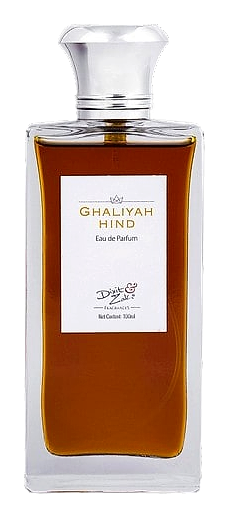
Ghaliyah Hind emerged from Dixit & Zak's expanding Ghaliyah lineage, described by the house as an "augmentation" of that collection, pushing the formula toward something more complex and confrontational. Nitish Dixit and Zakir Laskar built this as a layered conversation between Indian and Middle Eastern aromatic traditions, using two oud sources, Bangladeshi and Indian, alongside an unusually dense heart of rose absolute, jasmine, and tuberose. The name suggests a South Asian register, an anchoring in regional identity even as the composition reaches toward broader influences. What emerged is a fragrance that doesn't negotiate.
The pyramid is stacked. Sixteen base materials, five heart notes, two top notes, and every layer earns its place. The combination of castoreum, civet, and hyraceum is rare in contemporary perfumery; these are materials that require confidence to deploy, materials that smell unmistakably alive. Added to that: two oud sources, Bangladeshi and Indian, each bringing a slightly different character of that dark, resinous wood. The rose absolute doesn't soften this, it amplifies it. Jasmine and tuberose push the floral component into something almost indolic, almost too much. Almost.
The evolution
The opening is the shortest chapter. Bergamot gives you thirty seconds of citrus clarity, then damask rose sweeps in and stays. Not bright rose, something thicker, with a jam-like density that keeps building as cardamom and geranium arrive. The heart is where this fragrance earns its reputation. Jasmine and tuberose push the florals into territory that some find intoxicating and others find overwhelming. If the animalics are going to offend, this is when they arrive. Civet and castoreum appear not as accents but as structural elements, lifting the composition into something warm and alive. By the drydown, the oud and sandalwood settle underneath, giving the animalics somewhere to rest. Vanilla softens the edges. Saffron adds a faint medicinal warmth. This is a fragrance that will still be present six hours later, still warm, still animalic, still unmistakably itself.
Cultural impact
Ghaliyah Hind represents a movement toward authentic Middle Eastern perfumery traditions in the global market. This fragrance bridges heritage with contemporary taste, introducing Western audiences to the rich history of Arabian attars and rose cultivation. The blend of bergamot and rose appeals to both traditional and modern sensibilities, creating a cross-cultural dialogue through scent. Its niche positioning challenges mainstream fragrance industry norms, offering an alternative to synthetic, mass-produced perfumes. The scent speaks to a growing desire among consumers for genuine, culturally-rooted olfactory experiences rather than generic designer compositions.