
The Story
Why it exists.
The beginning
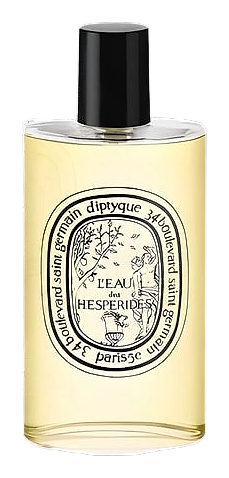
The Hesperides were nymphs who guarded a garden of golden apples. In Greek myth, those apples came from a sort of fruit tree, the precious, the guarded, the luminous. Diptyque named this fragrance for that source, for the abundance and brightness the ancients associated with those mythical trees. Olivier Pescheux built L'Eau des Hespérides around that promise: not just a citrus fragrance, but one that carries the weight of the story behind the fruit. Launched in 2008, it arrived as the house continued to develop its approach to fragrance as a form of storytelling, compositions that transport you somewhere specific, somewhere with history.
The choice of bitter orange as the dominant citrus is deliberate. Unlike the rounder, sweeter orange often used in mainstream fragrances, bitter orange carries a green, slightly astringent quality that feels closer to the whole fruit, zest, pith, and all. Paired with petitgrain and caraway, the fragrance gains an herbal dimension that most citrus skip entirely. The immortelle in the base is the surprise. Usually associated with Mediterranean landscapes and honeyed warmth, here it serves as an anchor, keeping the brightness from disappearing entirely into the air. It's what makes the drydown feel earned rather than merely fading.
The evolution
The opening is immediate and confident. Citrus oils hit the skin like sunlight through a window, bright, almost abrasive in their clarity. Mandarin and lemon don't wait their turn; they arrive simultaneously, creating a chord rather than a sequence. Soon after, mint appears and shifts everything cooler. The rosemary and caraway add a green, slightly medicinal edge that lasts longer than expected. The heart phase is brief, floral notes appear as a whisper, then surrender to the base. As time passes, immortelle and cedar take over, softening the edges without losing the fragrance's essential character. Eventually it settles close to the skin, becoming intimate and personal. The cedar lingers on fabric long after it's left the skin, a lingering reminder of the scent's presence.
Cultural impact
L'Eau des Hespérides occupies a particular space in the Diptyque catalog: a fragrance built for wearability, for the person who wants sophistication without severity. It carries the house's literary sensibility while offering a citrus fragrance with real character. The scent balances brightness with depth, presenting an accessible entry point to the Diptyque aesthetic without sacrificing nuance. Its quiet achievement lies in making something both approachable and distinctly its own, a fragrance that invites discovery without demanding attention.