The Story
Why it exists.
The beginning
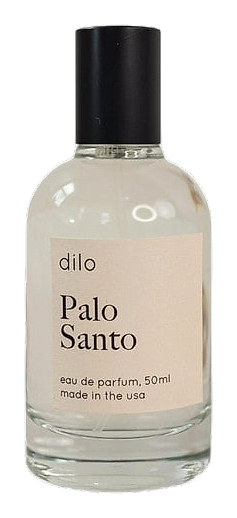
Palo Santo launched in 2022 as part of Dilo's elsewhere Collection, the studio's entry into personal perfumery. Dave DiLorenzo, the studio's founder and perfumer, built the composition around the sacred wood that gives the fragrance its name. The holy wood reference is literal, not decorative, rooted in a botanical that's been burned in ceremony for centuries, and here it anchors a composition that treats the material as a serious perfumery note rather than a candle shortcut. The opening is unusually cool for a wood-centric fragrance, almost aggressively so, with violet and iris staking an early claim before the warmth even has permission to enter. It reads as a deliberate choice: build the cold first, then let the palo santo arrive as reward rather than introduction.
What makes this composition worth slowing down for is the tension between the top and the base. Violet and iris open with cold, rooty powder, almost mineral, like crushed stone on a cold morning. The heart threads in cardamom and rose for warmth and lift. Then the bottom drops into palo santo and sandalwood, woods that don't compete but converse. The result reads more like a quieter study in texture: powder above, smoke below, and a floral bridge that refuses to sweeten the deal.
The evolution
The opening feels like a different fragrance than the drydown, and that's the point. Violet and iris arrive cool, slightly chalky, with a metallic edge that reads more cold air than perfume. The cardamom breaks through relatively early, warming the iris into something livable, almost skin-like, before the rose fully arrives and the composition shifts from cool to composed. The geranium gives it a green, slightly bitter lift that keeps the floral from going pretty. As the hours pass, the palo santo and sandalwood settle into the base, taking on a smoky weight that the opening never hints at. The violet doesn't disappear; it deepens, turning from powder to something closer to incense, and the whole composition moves from sharp to soft without ever losing its shape.
Cultural impact
Palo Santo tends to surface in community conversations alongside woody and incense-driven compositions, with names like Le Labo's Santal 33 appearing in comparison lists on fragrance platforms. The overlap makes sense: both lean on a sandalwood base with smoky, resinous undertones, and both occupy the wood-and-incense territory that has defined a significant slice of contemporary indie perfumery. Within that conversation, Dilo's take registers as a quieter, more introspective option, built for the wearer who wants depth without announcement.