The Story
Why it exists.
The beginning
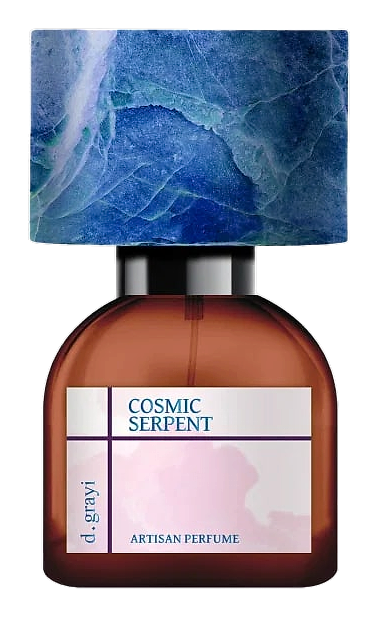
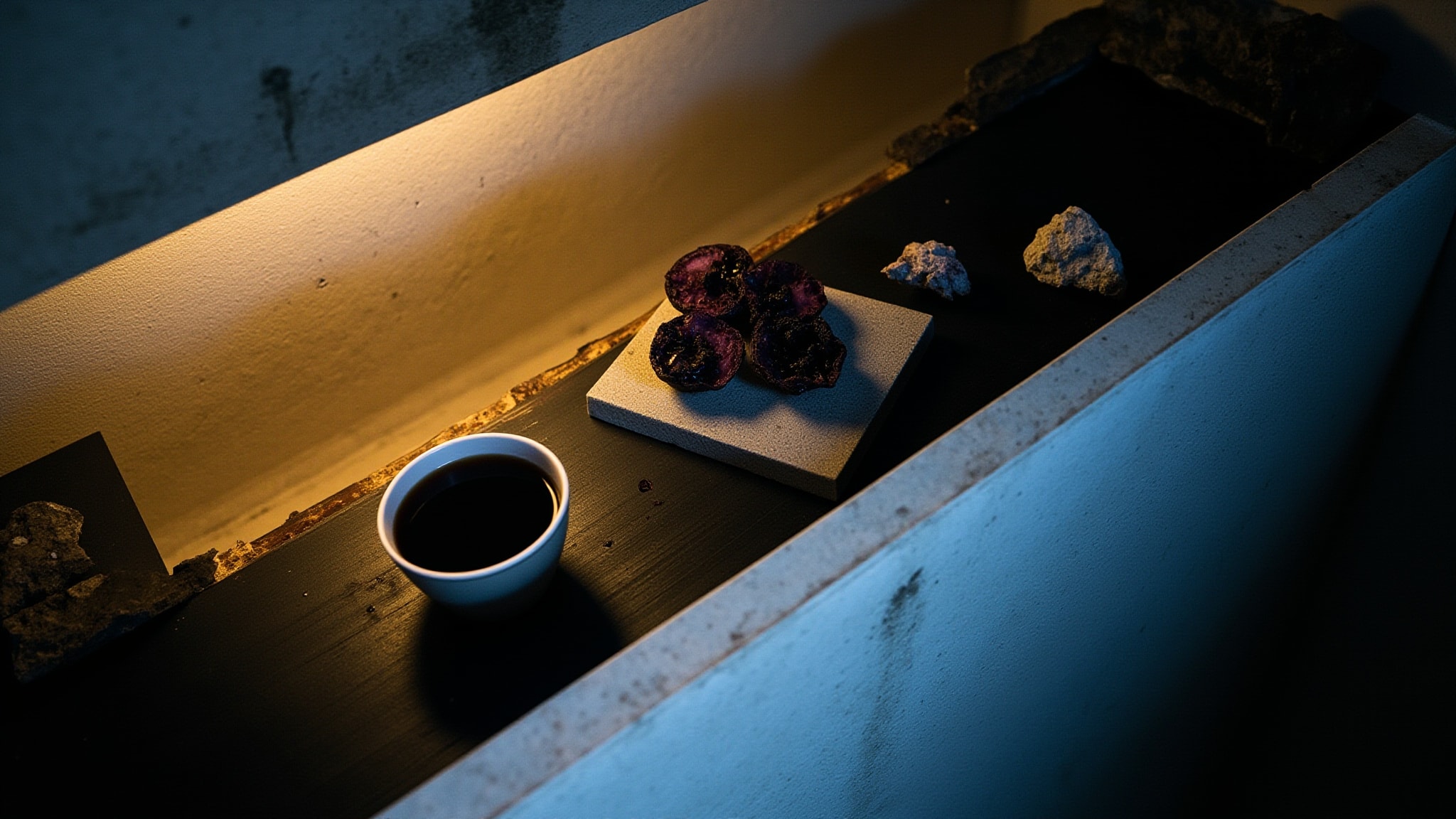
Cosmic Serpent arrived in 2025 from d.grayi, composed around an unlikely subject: a psychedelic serpent entity, channelled through the earthy sweetness of blueberry and the dark fermentation of pu-erh tea. The pairing sounds strange on paper. On skin, it reads as something older, a fruit offering left in a damp stone chamber, lit from within. The fragrance opens with the cool, almost electric snap of blue tansy, a note that smells the way blue aventurine looks: mineral, quiet, a little otherworldly. From there the composition descends quickly into earth and tannin, with pu-erh tea pulling the fruit away from anything sugary and into darker territory, something closer to fermented plum skin or the sediment at the bottom of a steeped pot.
What sets Cosmic Serpent apart is the collision of materials. Blue tansy, with its cool, slightly herbal snap, lands first, a colour-cued note that smells the way blue aventurine looks: mineral, quiet, a little otherworldly. Pu-erh tea brings earth and tannin, the fermented depth that stops the blueberry from going syrupy. Chamomile arrives in the heart not as a sleepy herbal tea note but as a softener, the floral equivalent of candlelight in a cave.
The evolution
The opening hits cool and green. Blue tansy leads with that camphoraceous snap, joined immediately by pu-erh tea's dark, loamy warmth. The early phase feels like two rooms: one chilled, one brewed, each occupying its own corner of the composition. Then blueberry arrives, but not as a top-note fruit pop. It comes through bruised, jammy, carried by the chamomile into something closer to dried fruit skin than fresh berry. The heart phase is where the fragrance stops being pretty and starts being specific. Blueberry and chamomile settle into a vegetal sweetness that smells like tea left to steep too long, the kind of over-infusion where the water has gone dark and the leaves have surrendered everything.
Cultural impact
Cosmic Serpent reads as a study in how a familiar note can be rerouted. Blueberry, often used as a shorthand for gourmand sweetness or fresh-fruity appeal, gets pushed here through tea fermentation and oakmoss into something closer to natural wine or fermented fruit skin. The result is a fragrance that resists easy category, part fruit, part earth, part mineral, holding together through texture rather than theme. The blueberry in particular behaves more like an aged ingredient than a fresh one, jammy and bruised, carrying the weight of fermentation rather than the brightness of a just-picked berry.