The Story
Why it exists.
The beginning
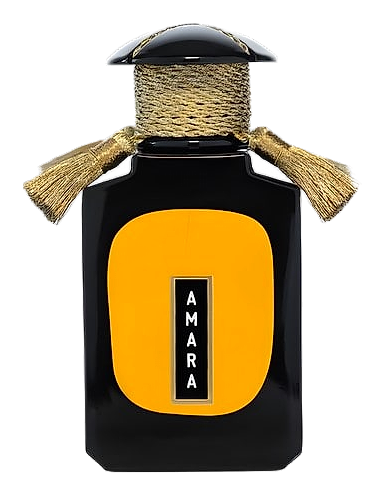
Amara began with a single image, the kind that arrives before the scent does. The brand's perfumer described it as a hot citrus-like sunrise hovering over smooth sandalwood, a brief that would shape every decision in the bottle. Cultus Artem operates as the brand's founder and sole nose, and by the time she released Amara in 2019, the house had already developed a series of signature compositions, each formulated with deliberate patience. Amara was designed to sit on skin the way intense heat feels at the surface, blazing and bright, but with a cooler density hovering just above. The official framing calls it a shimmering mirage in the intense heat of a blinding summer day, and that mirage is what the composition reaches for from the very first spray.
What makes Amara unusual is the Tunisian orange blossom at the center, bitter orange flower rather than sweet, married to tagetes (marigold), a sharp floral that adds an herbal bite most compositions avoid. The neroli and petitgrain give the structure a green backbone, threading a clean bitterness through the opening and preventing the white florals from turning creamy. Copaiba balsam in the base offers a soft, almost honeyed resin warmth that smooths the transition to Indian sandalwood, lending depth without weight.
The evolution
The opening belongs to neroli and Tunisian orange blossom, a sharp, almost metallic brightness with petitgrain cutting through underneath like torn leaves. The bitterness isn't polite. It registers. Then the tagetes, French marigold, enters the orbit, adding a dense herbal-cool that the brand compares to the air hovering above hot pavement, a sensation that feels both grounded and slightly hallucinatory. The citrus doesn't vanish entirely as the hours pass; it just changes character, rounding into sweet orange before sinking toward the base. Eventually the Indian sandalwood and copaiba balsam take over, and the scent pulls closer to skin. The marigold's green bite stays threaded underneath, keeping the wood from settling into pure comfort.
Cultural impact
Amara sits within Cultus Artem's catalog as one of the brand's sharper, more citrus-forward compositions, distinguished by its reliance on bitter orange flower rather than the sweeter florals that dominate much of contemporary niche perfumery. The composition treats orange blossom as a structural element, an architectural note rather than a decorative one, giving it a seriousness that sets it apart from softer floral releases. Tunisian orange blossom brings a sun-warmed intensity, and the tagetes adds an herbal complexity that lingers through the wear, pushing the scent toward something closer to grown perfumery than to facile prettiness.
The House
Cultus ArtemIn an era of mass-produced scents, Cultus Artem stands apart. Founded in 2015 by Holly Tupper in San Antonio, Texas, this independent house channels the sensibilities of a jewelry designer into the art of perfumery. Each fragrance feels like wearing a singular, carefully considered object—neither trendy nor nostalgic, but quietly assured. The name itself speaks to purpose: "Cultus" for devotion, "Artem" for art.
The Creator
Holly TupperTupper draws heavily from her floral designer mother’s world, building fragrances around lush floral foundations—often layered with unexpected mineral or resinous undertones. Her background in jewelry-making translates into a keen attention to structure and precision; each not…