
The Story
Why it exists.
The beginning
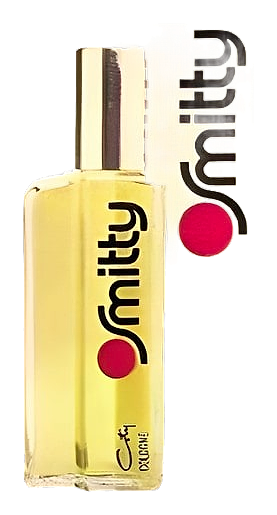
1976. Disco ruled the clubs and the air was thick with smoke and hairspray. Somewhere in that excess, Coty released Smitty, a fragrance that announced itself. Green notes and citrus opened sharp and immediate, built to cut through a crowded dance floor. The name itself carried that era's casual confidence: Smitty. No pretension. Just a bold green chypre that refused to be polite. The brand called it "the spirited and sexy new feeling in fragrance", and meant it. Oakmoss formed the structural backbone rather than the afterthought, giving the composition a mossy depth that modern reformulations simply can't replicate.
What sets Smitty apart from its contemporaries is the density of its green note structure. Galbanum leads the citrus and green opening, giving it an almost electric quality that was unmistakably 1970s. The floral heart is large and unapologetic, carnation and jasmine over a mossy foundation, rather than delicate blossoms floating above it. Patchouli, vetiver, and oakmoss anchor the composition the way only late-70s chypres could, over warm amber and sandalwood. Vintage wearers describe it as "a big red rose in full bloom with carnation and jasmine embellished with the classic green notes that were so popular in the 1970s." This is not a polite fragrance. It was made to be noticed and to last through the night.
The evolution
The opening arrives fast: citrus brightness colliding with green notes in that sharp, galbanum-forward way that immediately dates the composition to its era. Within minutes the citrus recedes and the flowers take over, carnation and jasmine assert themselves boldly over the green. The oakmoss shows up early, refusing to wait for the drydown, working its way into the heart of the fragrance from the start. That transition, bright, assertive, unapologetic, defines Smitty's character. As the heart settles, the true structure reveals itself: moss weaving through sandalwood and amber, that classic chypre skeleton holding everything together. The drydown is long and close, lingering against the skin for 6-8 hours rather than projecting across a room. By the end, it smells like the walls of a disco that was never quite cleaned, green, mossy, alive.
Cultural impact
Among vintage chypre collectors, Smitty holds a particular place as a bold, mossy-green 1976 release that could cut through smoke-filled rooms. Vintage reviews describe its character as "loud and sassy", a dense chypre that stood apart from the more accessible disco fragrances of its era. The oakmoss density, now impossible under current IFRA guidelines, is what draws collectors to the vintage formula. Smitty is discontinued, which only sharpens its appeal: a time capsule of a specific moment in fragrance history, preserved in amber and oakmoss.