
The Story
Why it exists.
The beginning
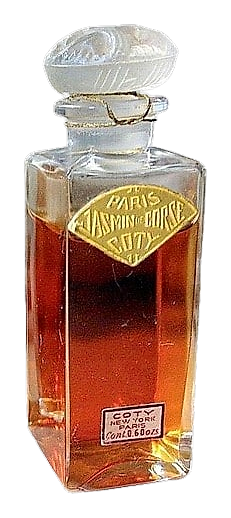
Jasmin de Corse takes its name from Corsica, François Coty's birthplace. The fragrance was his statement about jasmine: the real thing, raw, indolic, full-bodied. Named for the place, shaped by his conviction that fragrance should smell like what it claims to be. The jasmine in this composition does not behave politely. It arrives unapologetically, carrying the full weight of the flower's character. There is sweetness here, certainly, but also something earthier and more complex. The indolic facets give it a sensuality that synthetic approximations often strip away, leaving something that feels alive rather than constructed. This is jasmine as Coty understood it should be, captured in a bottle that honors both the flower and the island that gave him his name.
The jasmine in Jasmin de Corse isn't a whisper. Community reviews consistently describe it as 'thick and sultry,' 'indolic,' with a heaviness that borders on animal. One wearer compared it to broken jasmine branches in her hair at night in a wild garden. That's the key: Coty built this around jasmine's most honest expression, the sticky, nectarous blooms that smell nothing like a department store. The animal note (musk, by most accounts) doesn't hide. It amplifies. This was revolutionary in 1906 and remains disarming today.
The evolution
The opening hits like jasmine crushed under afternoon sun, thick, sweet, indolic. No preamble. Within minutes the green facets arrive, herbal and slightly sharp, like stems broken alongside the blooms. Then the musk settles in. Not polite musk. Musk that knows it's there, that presses against the jasmine rather than softening it. The drydown runs long on most skin, and as the hours pass the composition compresses into something warmer, more intimate. The jasmine doesn't disappear. It becomes skin rather than perfume, clinging close and revealing itself only to those who lean in. What begins as a declaration becomes a whisper, and the wearer discovers that the flower's power was never in its volume but in its persistence.
Cultural impact
Jasmin de Corse holds a specific place in perfumery history as one of the earliest white floral fragrances. What Coty understood then, that jasmine smells best when it smells like jasmine, not like an idea of jasmine, still sets this fragrance apart. Some wearers find its directness startling. Others find it refreshing in a market full of gentler interpretations. Either way, the fragrance remains an example of how a single flower, treated without compromise, can fill a room with something that feels genuine rather than constructed.