The Story
Why it exists.
The beginning
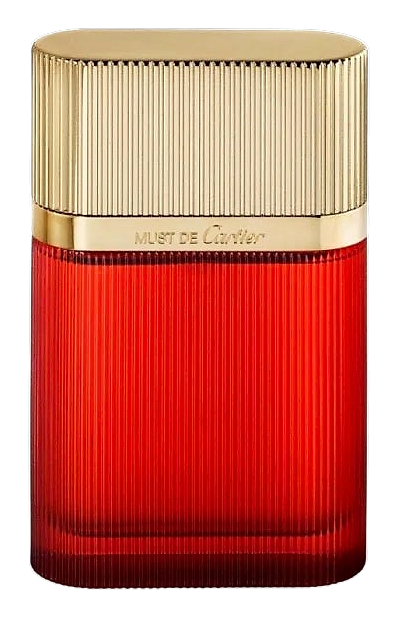
Must de Cartier Parfum arrived in 1981, created by perfumer Jean-Jacques Diener. The parfum concentration gave Diener room to layer galbanum's green sharpness against jasmine's narcotic warmth and a vanilla base that anchors the whole structure to skin rather than air. The galbanum at the top reads almost architectural, a cool, resinous green that slices through the richness below and prevents the composition from ever feeling heavy. From the first spray, that green note sets the tone, bright and unapologetic, pulling the jasmine forward into sharper relief than it would appear on its own. The narcissus in the heart adds a vegetal, almost hay-like thread that keeps the florals from drifting into pure sweetness.
What makes Must de Cartier Parfum distinctive is the galbanum-jasmine pairing. Galbanum brings a resinous, almost metallic intensity, the kind of green that reads more like crushed stems than leaves. Jasmine leans indolic and creamy, with a dense, almost narcotic warmth that fills the space the galbanum opens up. Together they create a push and pull that gives the composition its architecture. Narcissus joins the heart with a slightly hay-like, earthy undertone, lending the florals a savory edge that keeps them from collapsing into pure sweetness.
The evolution
The opening is all galbanum and neroli, green and slightly bitter, with mandarin adding a brief citrus brightness underneath. It reads almost like cold air moving through cut stems. Then the jasmine arrives, and the entire composition shifts register. The green sharpens into something warmer, almost honeyed, as narcissus adds its dry, vegetal undertone. Rose stays quiet, threading through without dominating. As the hours pass, the vanilla and musk settle into the base, and the whole thing softens into a warm, slightly powdery skin scent. The vetiver keeps it grounded, preventing the vanilla from tipping into dessert territory. The transition is gradual rather than dramatic, each phase folding into the next rather than announcing itself. What remains late in the wear is a close, intimate trace of vanilla and white musk, still warm but quieter, more suggestion than statement.
Cultural impact
Must de Cartier Parfum holds a distinctive place among late-20th-century floral-oriental compositions. The galbanum-jasmine pairing gives it a character that feels both classical and slightly off-center, the green note providing a sharpness that many florals of the era lacked. It is the kind of scent that rewards attention rather than demanding it, revealing more on the second wear than the first. The parfum concentration lends it a weight and longevity that has kept it relevant across decades of shifting trends.