
The Story
Why it exists.
The beginning
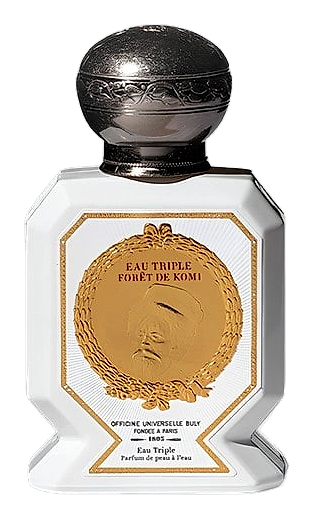
Forêt de Komi is Buly 1803's translation of a specific place: the Komi forests of Russia, a dense resinous woodland that ranks among Europe's most remote taiga territories. The composition is water-based, and that format choice shapes everything about how the scent sits on skin, light and atmospheric rather than dense or syrupy. The inspiration is geographic, drawn from the landscape itself rather than any abstract mood. The official description sets the scene precisely: a Russian forest, where mineral and woody essences combine, released under the rain by the delicate mosses on the pine trees. That's not branding copy. That's a topographic brief. You can almost smell the loam and the damp bark just from reading it.
What makes this composition worth your attention is the petrichor in the base. Most green fragrances lean on galbanum or fig leaf for their vegetal bite, but Buly chose something rarer, the smell of rain hitting dry stone and bark, an accord that smells less like a plant and more like a place. It gives Forêt de Komi a wet, stony depth that pure aromatic-green compositions rarely achieve. The cashmeran and musk underneath add a clean skin warmth without tipping into sweetness, so the forest stays forest, not potpourri.
The evolution
The first ten minutes are an herbal handshake: sage and basil pushing forward with a faint cardamom coolness, almost like crushed leaves in cold water. Pine and moss take over somewhere around the half-hour mark, and this is where the fragrance locks into its real character. The petrichor note surfaces gradually, not as a dramatic shift, more like a weather change you only notice after standing still for a while. That damp-stone quality hangs on well into the second half of the wear. By the later hours the greens have softened into a cashmeran skin warmth, still faintly piney, still cool, still recognizably forest, but quieter. On fabric there's a ghost of moss and clean musk, the kind of scent trail that makes someone lean closer without knowing why. The drydown rewards patience, revealing layers that the opening only hints at.
Cultural impact
Forêt de Komi sits comfortably alongside other modern green-aromatics built around mineral or watery facets, and some wearers have noted a kinship with compositions from houses like Aesop and Comme des Garçons, though the petrichor base gives it a distinct damp-stone signature most forest fragrances skip. The water-based format itself contributes to the composition's particular character, lending a coolness and transparency that alcohol-heavy sprays often obscure.