The Story
Why it exists.
The beginning
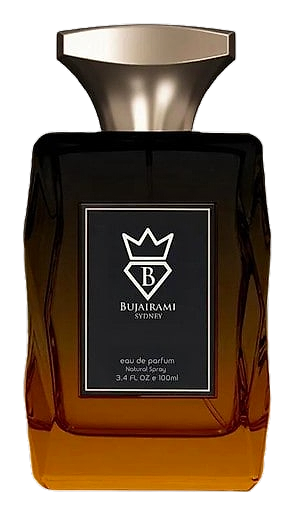
Assassin arrived in 2026 from Bujairami, the Australian house. The name is direct. The construction is deliberate. An Oriental Woody built around a bright-to-dark arc, Assassin opens with fruit and citrus to catch attention, moves through malt, whiskey, and coffee in the middle to establish character, and settles into peat, vanilla, amber, and musk in the base to leave a trail that holds. Bergamot and orange arrive with a clean, almost cheerful snap, bright and uncomplicated, the kind of opening that feels casual and light. Then the composition pivots, the malt and whiskey pushing in with a warm, boozy weight that grounds the fruit, and the coffee stepping in alongside patchouli to drag the heart into roasted, earthy territory.
What makes Assassin structurally interesting is the tension between the fruity-citrus opening and the smoky-gourmand base. Bergamot and orange are clean, almost cheerful notes, bright and uncomplicated, the kind of opening you'd expect from a lighter daytime composition rather than something this heavy underneath. Within minutes, the heart shifts to malt and whiskey, a warm, sweet-and-spirited pairing that carries a boozy warmth, the malt reading as cereal-sweet and the whiskey adding that familiar cask-aged burn.
The evolution
The opening is deceptive. Fruity notes, bergamot, and orange create something almost casual, a bright, slightly sweet introduction that doesn't telegraph what's coming. The citrus sits up top with a clean, lifted quality, and for the first few minutes the fragrance feels like a different animal entirely, something light and easy, the kind of scent you might wear to brunch. Then the malt and whiskey arrive and the composition pivots. The warmth comes in fast, a boozy sweetness that settles into the chest, and the coffee grounds itself in the heart with a dark, roasted bitterness. Patchouli adds an earthy weight beneath it, and cedar keeps the whole thing from collapsing into pure sweetness, lending a dry, woody backbone that gives the heart structure. The drydown is where Assassin earns its reputation.
Cultural impact
Assassin sits firmly in the whisky-and-smoke corner of niche perfumery, a category where collectors tend to gravitate toward compositions built around unconventional gourmand and boozy materials rather than traditional florals or clean musks. Within Bujairami's catalog, it reads as a bolder, more evening-oriented entry, a fragrance that leans into the heavier end of the house's style and isn't shy about it.