The Story
Why it exists.
The beginning
Verno's name draws from the Italian vernacolo, the local way of speaking. Not the formal language of perfumery. The everyday vocabulary of a place. Released in 2025 as part of Bottega Verde's Momenti di Toscana collection, which references specific Tuscan landscapes, Verno was built around a single sensory idea: the quality of air just after a morning rain in the Val d'Orcia hills. The stillness before the day asserts itself. Brightness that gives way to something quieter, more considered.
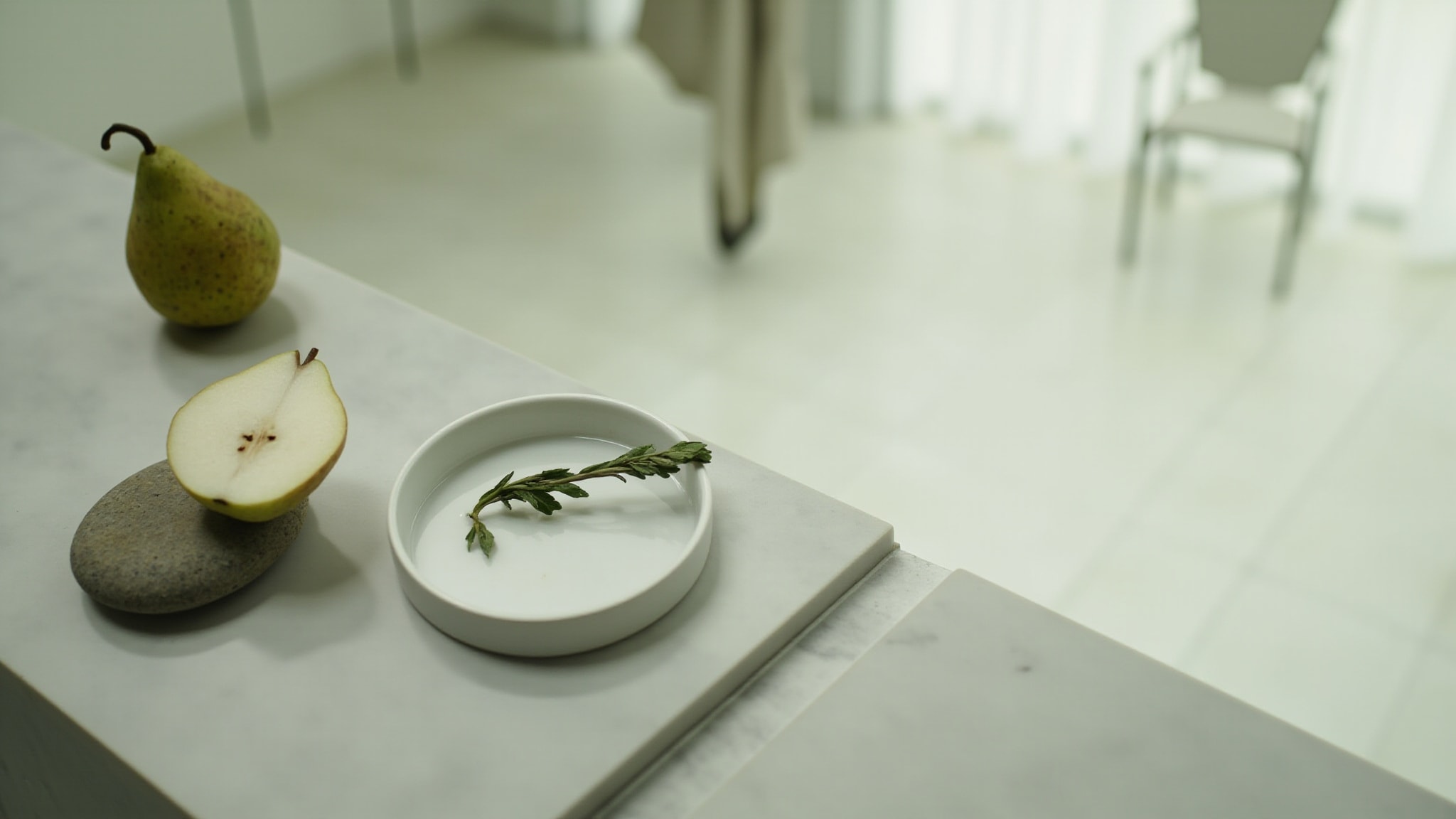
What makes Verno structurally unusual is its direction. Most fragrances descend, citrus opens, florals follow, woods anchor. Verno builds upward from water. The sorbet and pear create a bright, almost shimmering start, but that shimmer isn't the destination. It's the setup for something cooler. Water lily and sage introduce a deliberate tension, aquatic and herbal, delicate and grounded. The pairing keeps the fragrance from tipping into either extreme. The juniper and marine base then creates a clean mineral quality that stays close to the skin rather than announcing itself. This is restraint as a compositional choice, not a limitation.
The evolution
The opening lasts thirty minutes of genuine brightness, pear's fruitiness and sorbet's cool shimmer combining into something that reads as light on water rather than any single note. Then the brightness softens. Water lily arrives quietly, almost hesitantly, and with it the sage adds a cooler, greener register. This is the heart of the fragrance and also its longest phase, two hours of something contemplative and close. The drydown doesn't arrive dramatically. It settles in almost imperceptibly, the marine and woody notes replacing the florals with a clean, mineral stillness that stays within arm's reach for the remaining hours. On fabric, a faint trace survives until the next morning.
Cultural impact
Verno arrives as part of Bottega Verde's Momenti di Toscana collection, a 2025 initiative that ties each fragrance to a specific Tuscan landscape or sensory moment. This approach reflects a broader trend in European niche perfumery toward place-based storytelling, where geographic and cultural specificity replace generic marketing. The aquatic-floral genre itself has deep roots in modern perfumery, from the marine explosions of the 1990s to the watery transparencies of the 2000s. Verno enters this lineage with restraint rather than spectacle, prioritizing the quiet suggestion of morning light on still water over the bold assertions that dominated earlier decades.