
The Story
Why it exists.
The beginning
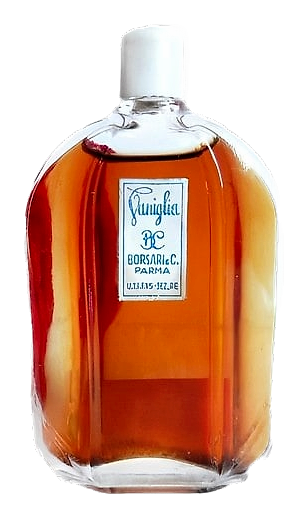
Vaniglia arrived in 1940 from Borsari 1870. The choice was almost philosophical. Most vanillas of that era competed with layers of spice, tobacco, or amber. Borsari stripped the scaffolding away. What remained was the ingredient itself, treated with the kind of restraint usually reserved for perfumers who trusted their material. A simple, single-note study that placed one ingredient at the center and refused to complicate it, Vaniglia took a path that demanded confidence in a single material, asking the wearer to sit with one voice rather than a chorus. The composition reads vanilla, powdery, sweet, balsamic, and soft spicy, yet those descriptors describe the personality of one ingredient rather than the interplay of many. It's a meditation dressed as a perfume.
A vanilla fragrance built around a single note is a risk most houses won't take. The 1940 release skipped the chorus entirely. The main accords read vanilla, powdery, sweet, balsamic, and soft spicy, but those descriptors describe the personality of one ingredient rather than the interplay of many. It's a meditation dressed as a perfume. The powdery quality gives it an old-fashioned intimacy that modern gourmands rarely achieve, and the balsamic warmth suggests depth and quiet richness, the kind of restrained sweetness that makes you lean in rather than step back.
The evolution
Vaniglia doesn't perform a three-act play. It tells one story slowly. The opening arrives with a clean sweetness that reads almost like confectioner's vanilla dusted soft, warm without heat. There's no citrus spark to cut through, no herbal edge to sharpen things. Just the warm entry of vanilla at its most polite. As the composition unfolds, the balsamic undertone starts to surface. The sweetness deepens from sugary to something richer, almost resinous, the way pure vanilla extract darkens when it sits in a glass. The powder quality doesn't vanish; it settles into the composition like talc on a vanity, giving everything a soft-focus quality. The balsamic warmth brings a darker undertone, a faint sweetness that suggests depth without ever naming it outright. As the hours pass, the soft spicy register comes forward. It's not cinnamon heat or clove intensity.
Cultural impact
Vaniglia is a single-note study built around vanilla and nothing else. Borsari's 1940 release stays disciplined, refusing to dress up what needs no costume. The fragrance appeals to wearers who appreciate restraint, the kind of person who finds warmth in simplicity rather than spectacle. The composition reads as quietly domestic, more vanity table than bakery. There's no burnt sugar, no caramelized sugar, no pastry-like sweetness trying to capture the gourmand trend. Instead, the sweetness stays clean and direct, a soft warmth that feels like it belongs to the skin rather than to a particular scene.