
The Story
Why it exists.
The beginning
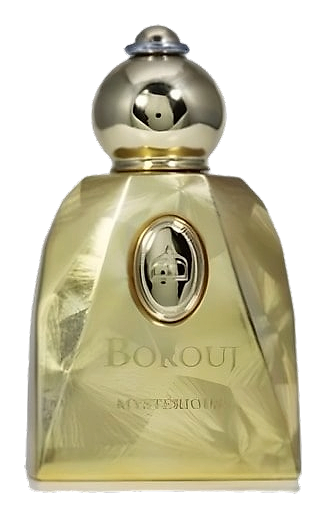
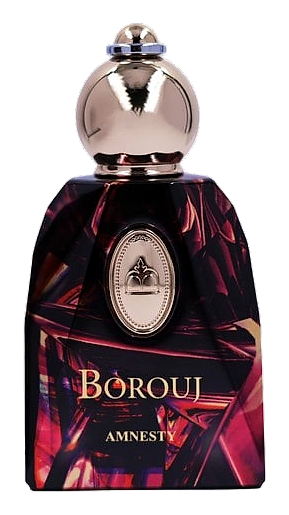
Amnesty arrived in 2025 as Borouj's statement on contemporary life. The name itself is a provocation, an invitation to reconsider what a fragrance can carry beyond aesthetics. Perfumers Christian Carbonnel and Laura Santander built the brief around a single question: what does it mean to be both seen and left alone? The answer is a fruity-floral that opens with confidence and settles into something quieter, warmer, and harder to leave.
The mandarin and red fruits create an immediate warmth that most fruity-florals achieve through sheer volume. Here, the sweetness arrives but keeps its voice down. The rose doesn't perform. It oils the hinges. By the time blackcurrant and jasmine arrive, the fragrance has already made its case for restraint as a form of generosity.
The evolution
Mandarin hits first, sharp and citrus-bright. Red fruits tumble in seconds later, their tartness undercutting any temptation toward candied sweetness. The rose arrives quietly, threading through the fruit without dominating. In the heart, blackcurrant brings a tart edge that cuts through the sweetness, while jasmine adds a waxy, green-floral depth. Peach and strawberry keep the whole thing playful without tipping into juvenile. The drydown is where Amnesty earns its name. Amber and musk settle close to the skin. Oakmoss adds a mossy, earthy undertone that grounds the sweetness. Vanilla arrives last, softening everything into a warm, creamy finish that lingers for hours after the fruit has faded.
Cultural impact
As a 2025 limited edition, Amnesty enters a market where fruity-florals dominate but rarely distinguish themselves. Borouj's approach cuts against complexity: one idea, executed with restraint. The fragrance earns its name by reconsidering what a sweet composition can do when it refuses to shout.