The Story
Why it exists.
The beginning
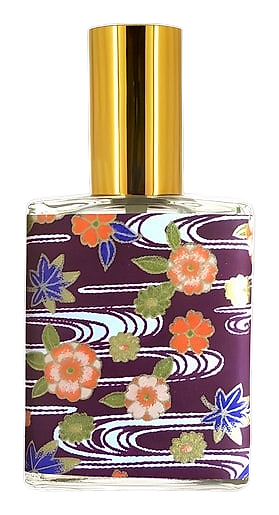
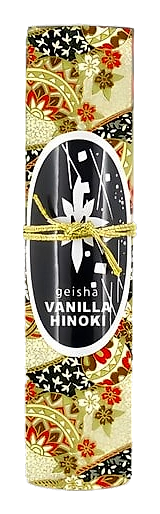
Maria McElroy built the Geisha collection around a single idea: scent as ritual, not performance. Vanilla Hinoki arrived in 2016 as part of that ongoing study. The brief was simple and stubborn. Find a vanilla that doesn't behave like vanilla. The answer came from Morocco, where a woodsy, smoky variety grows nowhere else. Pair it with hinoki cypress, and the tension writes itself. McElroy has always treated her compositions as small acts of attention, choosing materials that resist easy categorization. The woodsy, smoky character of this particular vanilla sets up a conversation with the hinoki's own woody character, but the two materials pull in different directions. One carries the shadow of a hearth, the other carries the green tang of something freshly cut.
Most vanillas in perfumery lean sweet, heavy, even cloying. The Moroccan material McElroy chose runs in the opposite direction. It's woodsy and smoky, carrying a character that reads closer to a campfire than a cake. Hinoki cypress amplifies that quality with its green, raw, unripe character. Bergamot lifts the top into brightness. Clove and cardamom add quiet heat. Cedar and amyris anchor everything in timber. The result is a composition that uses vanilla's warmth without ever letting it turn sticky. It's a structural choice, not a flavor.
The evolution
The opening is the brightest the fragrance ever gets. Bergamot leads, clean and almost tart, and you can sense the clove and cardamom working underneath. Nothing sweet yet. Then the hinoki arrives and the temperature shifts. The citrus doesn't fade so much as get absorbed into the wood, the way morning light gets absorbed into bark. Soon enough, you're in the middle of a lumber note. Cedar, amyris, the raw-cut hinoki. Leather threads through, and the Moroccan vanilla finally shows up, but read as smoke rather than sugar. The drydown is remarkably consistent. The woods never fully leave. What changes is the texture: the green, unripe character of the hinoki recedes gradually, the cedar softens slightly, and the leather-vanilla smoke settles closer to skin. On a sweater the next morning, you catch a ghost of the amyris and a soft, warm woodiness.
Cultural impact
Worn by people who want their vanilla to come with a backbone. The roll-on oil format, applied directly to pulse points, suits a fragrance that asks to be experienced up close rather than broadcast. The Moroccan vanilla sourcing gives this a distinct character in a world of vanillas that often blur together. Without the woodsy, smoky material at its core, Vanilla Hinoki would lose the tension that makes it work. The roll-on format also suits the meditative quality of the scent itself. It's not designed for performance. It's designed for the wearer, and for whoever happens to be close enough to catch it.
The House
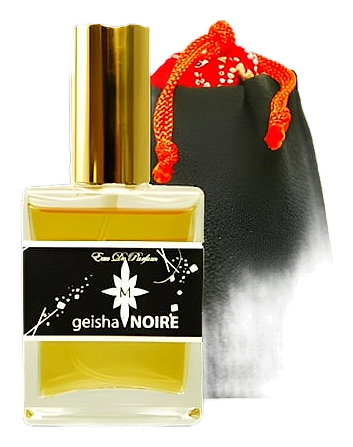
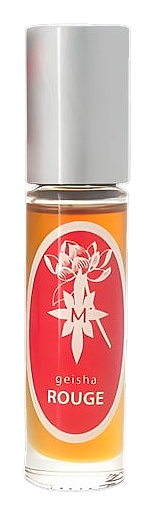
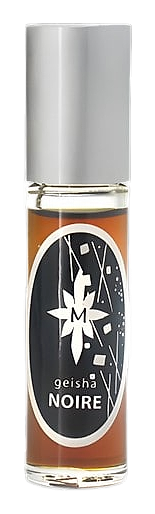
Aroma MAroma M is a New York-based niche fragrance house founded in 1995 by Maria McElroy, an artist and certified aromatherapist whose work bridges Eastern and Western scent traditions. The brand gained recognition through its signature Geisha Collection, which draws on McElroy's studies of Japanese culture and traditional geisha aesthetics. Aroma M produces both perfume oils and eau de parfum formats, with the roll-on oil versions becoming particularly beloved among collectors. The house operates from Brooklyn and has maintained its artisanal character across nearly three decades of operation. Notable releases include Geisha Noire (2007), Geisha Rouge (2011), Camellia (2014), and Geisha Botan (2018), each exploring distinct facets of floral and woody materials. McElroy's dual background in fine art and aromatherapy informs an approach to fragrance that treats scent as a sensory art form rather than purely commercial product.
The Creator
Maria McElroyMcElroy favors a refined minimalism grounded in Eastern tradition. She gravitates toward green tea, woods, resins, and the smoky, meditative qualities of Kodo ingredients.