
The Story
Why it exists.
The beginning
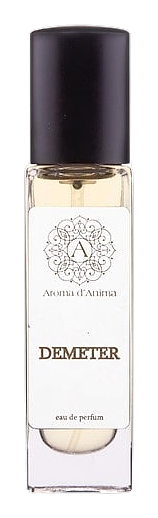
Demeter takes its name from the Greek goddess of harvest, growth, and the cycle of seasons. The fragrance was launched in 2017, composed by Anna Sivacheva for Aroma d'Anima, a house whose releases draw from mythological and natural archetypes. Squeglia has spoken about beginning with an image before notes are chosen, and that philosophy is written directly into Demeter's structure: a cool, rooty opening of iris and vetiver that suggests soil still holding frost, followed by a slow warmth that rises like heat returning to a field after winter. The goddess who waits underground. The earth that holds seed through the long quiet months. On skin, Demeter behaves like a season in transition rather than a single moment.
What makes the composition worth noting is how Sivacheva balances the cool, mineral character of iris against a surprisingly resinous base. Elemi and benzoin bring a church-incense weight that contrasts with white grapefruit's brightness and cardamom's lift. The white pepper adds snap without heat. Vanilla softens everything, but never enough to make it sweet. This is iris treated as architecture rather than decoration, a powdery backbone that lets the warmer notes orbit it instead of dominate.
The evolution
White grapefruit opens the door, sharp and slightly bitter, the way the fruit smells when you tear the skin with your thumb. It doesn't last long. Within fifteen minutes, the iris arrives, cool and mineral, almost like touching wet stone. Cardamom and white pepper push forward together, giving the heart a strange brightness that doesn't read as citrus anymore. Magnolia and jasmine sit underneath, barely perceptible, softening the spices into something more skin-like. The vanilla registers as warmth, not sweetness. By the two-hour mark, the woods take over. Cedar and guaiac wood give it a pencil-shaving quality, dry and focused. The elemi adds a lemony resin note that keeps the whole thing from sinking too deep. Oakmoss and benzoin arrive last, grounding everything into a mossy, almost liturgical drydown. The base stays close to skin for hours. On fabric the next morning, there's a faint trace of iris and cedar, like someone wore a wool coat to a garden.
Cultural impact
Demeter speaks to wearers who treat fragrance as something private and intimate, a scent meant for the person wearing it rather than for the room they enter. Its iris-forward composition rewards close attention, unfolding slowly across the skin and revealing layers of orris powder, green violet, smoky vetiver, and a faint sweetness reminiscent of dried grasses warmed by late sun. There is no demand for projection or spectacle here; the fragrance exists in the space between skin and air, a quiet presence that deepens with time.