
The Story
Why it exists.
The beginning
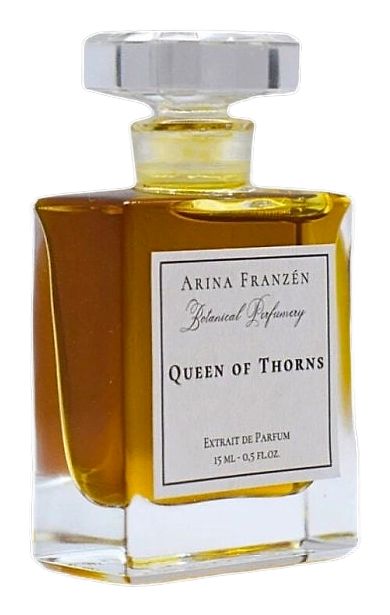
Queen of Thorns arrived in 2023 as part of Volume I in Arina Franzén's catalogue, a body of work rooted in botanical perfumery and committed to vegan formulations. The name reads like a fairy-tale warning, and the scent delivers on it: rose as something with spines, not something soft enough to crush. The composition leans into absolutes and natural materials that retain their rough textures, the unpolished edges of raw botanicals rather than the smoothed-out feel of reconstructed accords. That sensibility runs straight through the juice, from the first bright snap of citrus to the embers in the base. It's a fragrance that treats darkness as structural, a load-bearing element rather than a decorative afterthought.
What separates this composition is the spice architecture underneath. Clove sits in the heart next to Bulgarian rose, and that pairing does real work. The clove reads almost medicinal at first, the way raw clove buds smell before they've been cooked into anything, with a burning, slightly numbing heat that cuts through the sweetness of the petals. Boronia adds a honeyed, almost fruity undertone that anchors the rose without flattening it. Purple magnolia brings a green, slightly camphoraceous lift that keeps the florals from collapsing under their own weight.
The evolution
Queen of Thorns emerged in 2023 as part of Volume I, an extrait de parfum that arrived as a denser reading of an existing architecture. The composition centers on Bulgarian rose at the heart, with clove sharpening the accord and grapefruit zest lifting the petals off the skin in the opening. Boronia cuts through to keep the rose from collapsing into sweetness, while purple magnolia adds a green lift to the floral core. The base of cypress and guaiac wood gives the fragrance its smoky signature, dry and resinous rather than sweet. As an extrait, the concentration stretches each element, deepening the rose-clove interplay and giving the woods more room to develop over hours of wear. The drydown settles into something smoky, the cypress tightening while guaiac wood smokes low, leaving a trail that lingers close to the skin long after the florals have faded.
Cultural impact
Queen of Thorns treats rose as something structural rather than ornamental, a base note with weight and spine rather than a soft topnote meant to charm. The fragrance rewards attention. The clove reads as whole spice rather than collapsing into a generic warm-spice accord, and the boronia adds a layer that asks to be identified on first pass. It's a composition made for wearers who want to name what they're smelling, who care that each ingredient arrives with its own character intact. The Bulgarian rose at the center isn't there to soften the edges. It's there to set them.