The Story
Why it exists.
The beginning
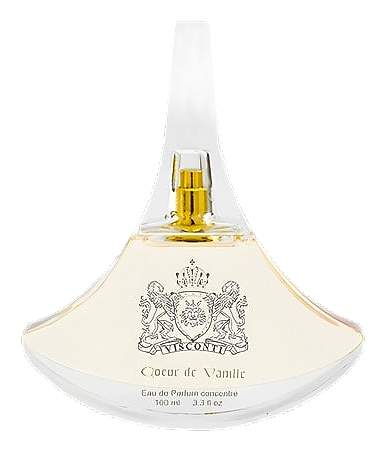
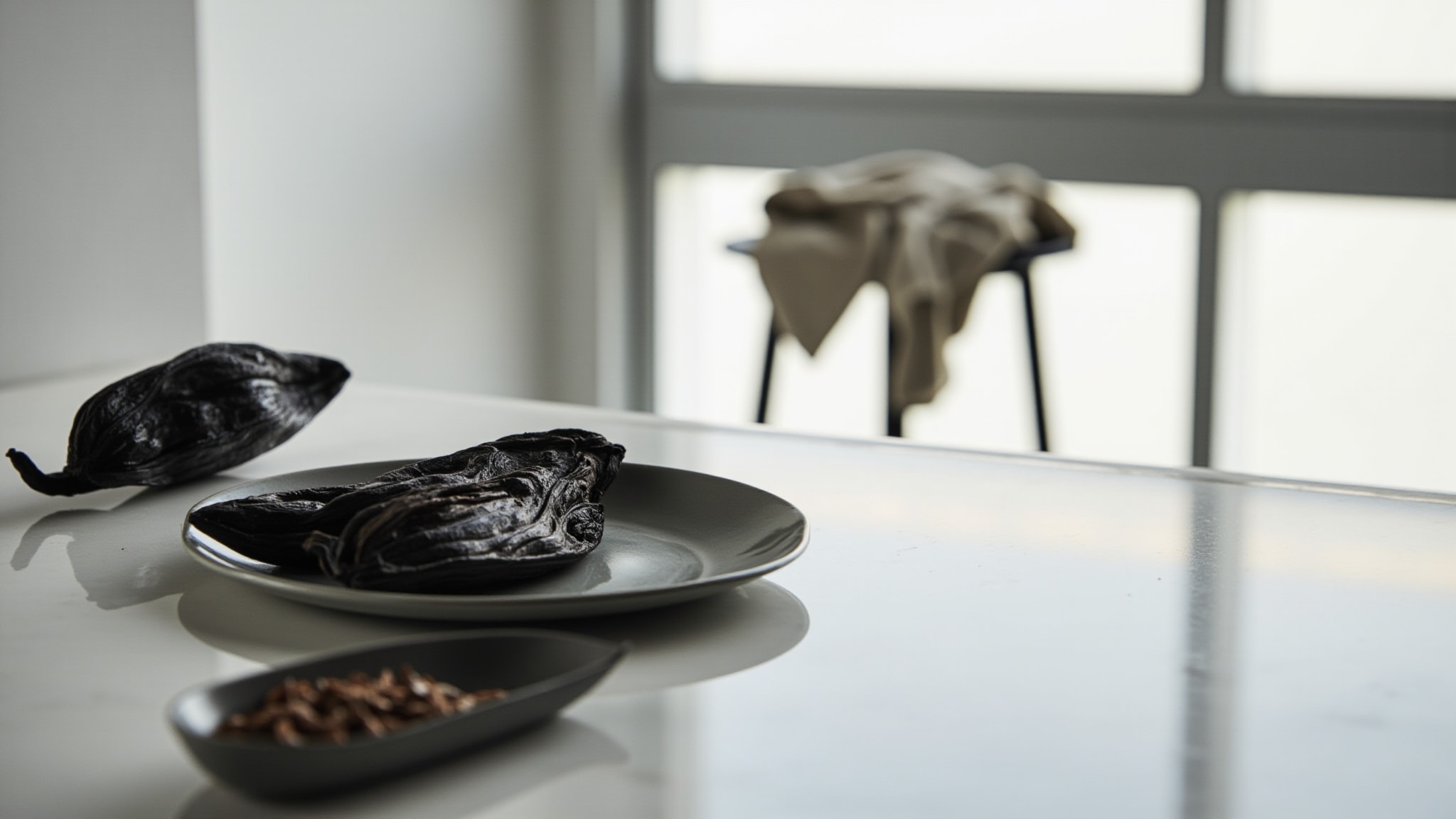
Coeur de Vanille, Heart of Vanilla, is Antonio Visconti's answer to anyone who finds most vanilla fragrances too sweet, too simple, too forgiving. The name itself is a statement: this isn't vanilla as accent or supporting player. It's the whole composition. Visconti built this fragrance around Mexican vanilla because it carries a fermented, almost wine-like depth that tropical varieties lack, a natural pungency that the house captures through maceration rather than standard extraction, allowing the raw material to speak without softening.
The choice to infuse vanilla bean in wine alcohol rather than a standard neutral carrier is what sets Coeur de Vanille apart from comparable smoky orientals. Wine alcohol doesn't just preserve, it contributes. The cacao and hazelnut in the base aren't decorative. They push the vanilla away from confection and toward something darker: a bitter cocoa dust, a roasted nuttiness that reads almost savory at times. Guaiac wood and vetiver add a smoky, slightly medicinal character that keeps the drydown from ever fully resolving into sweetness. The result is a vanilla that behaves more like a resin than a dessert.
The evolution
The opening announces itself with vanilla and pink pepper, bright, almost sharp, but warmed immediately by nutmeg. That initial hit lasts roughly twenty minutes before the clove asserts itself, adding a soft heat that sits on the skin rather than burning. By the second hour, guaiac wood and cedarwood take over, pulling the composition from sweet-gourmand into something drier, woodier, with vetiver lending a faint earthiness underneath. The cacao and hazelnut never fully surface as distinct notes, they function more as modifiers, keeping the vanilla grounded and the overall impression from ever tipping into candy. The drydown holds for most of the remaining hours, intimate and close to the skin, with the vanilla slowly fading to a warm trace. By hour ten, there's a faint cocoa-hazelnut memory on the skin, not quite perfume anymore, more like the ghost of one.
Cultural impact
Coeur de Vanille arrives at a moment when artisanal perfumery is experiencing renewed interest, with collectors seeking fragrances that prioritize craft over commercial appeal. The house's Florentine roots trace back to 1857, and this scent embodies that tradition of maceration-based extraction methods that modern perfumery often overlooks in favor of synthetic shortcuts. The combination of wine alcohol base with guaiac-vetiver and smoky cocoa positions it as a counterpoint to sweeter, more accessible orientals dominating the market. Its place within Antonio Visconti's core collection suggests a commitment to longevity over trend-chasing, offering fragrance enthusiasts a genuinely complex alternative to mass-market offerings.