The Story
Why it exists.
The beginning
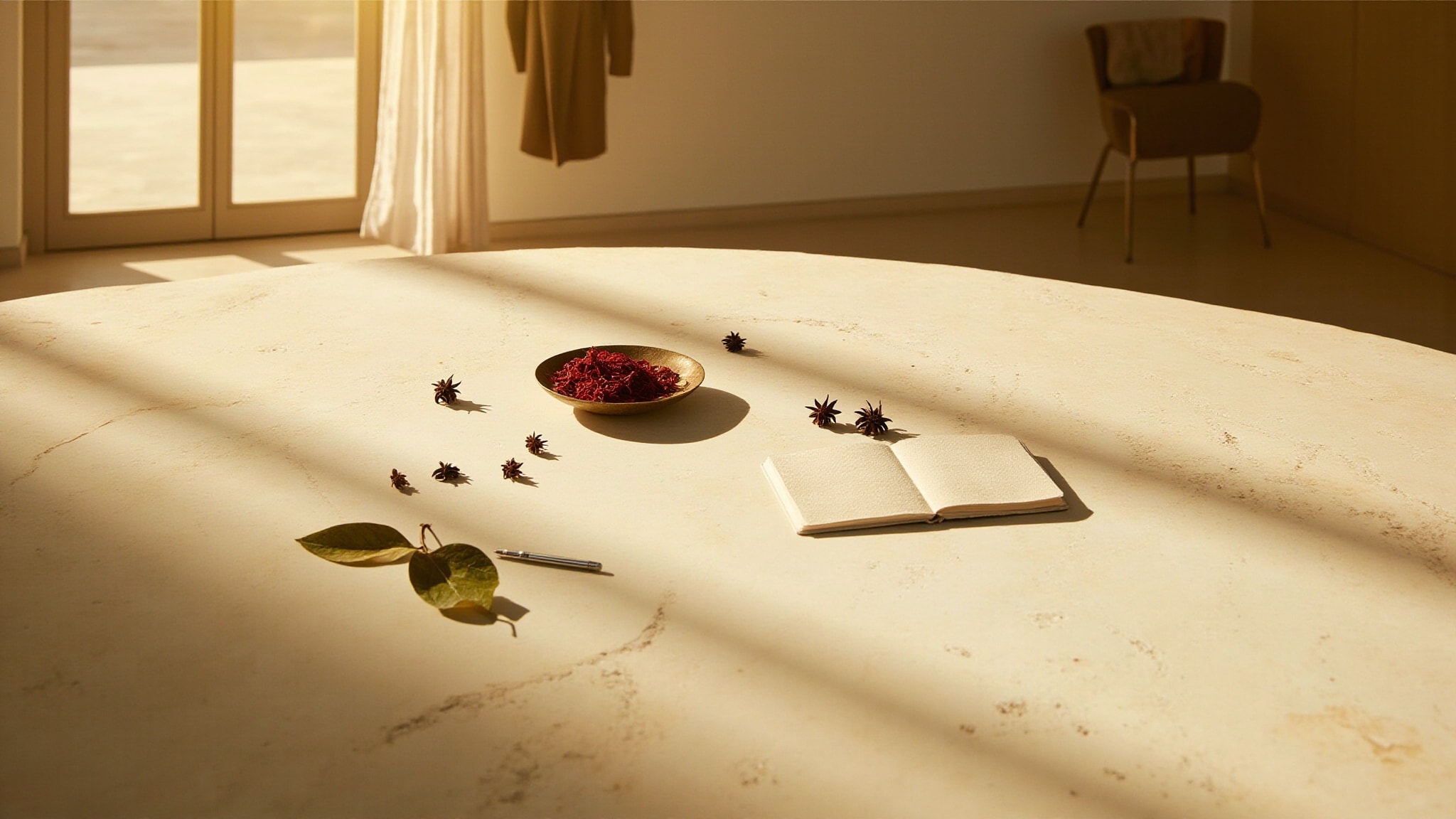
Anna Paghera's work treats each fragrance as an inquiry into color and how it can be captured in glass. The collection is named in Italian for the hues that anchor each composition, and Giallo di Tebe (the yellow of Thebes) sits at the center of that idea: a study in deep, sun-warmed yellow, the kind found in ancient pigments and aged plaster. The fragrance explores that particular shade of gold without leaning into sweetness, keeping the warmth dry, mineral, and grounded. It is a scent that reads as both ancient and immediate, built around the tension between light and weight, between the brightness of saffron and the quiet gravity of the base beneath it.
The composition layers saffron alongside a carefully calibrated set of supporting materials, each chosen to keep the gold from tipping into the gourmand territory the note so often falls into. The citrus oils lift the top without softening the saffron's drier edges, while the amber and woods in the base give the whole structure a warm, architectural backbone. The result is a fragrance that smells unmistakably Italian in its restraint: nothing shouts, nothing overstays, and every material is allowed to speak at the volume it deserves.
The evolution
The current formula represents years of refinement, with each iteration trimming away whatever made the saffron feel too heavy or too sweet. Earlier versions leaned on the saffron more heavily and risked flattening into a single golden note; later ones pulled back and rebuilt around a quieter, more architectural heart. The base went through its own revisions, searching for a drydown that felt lived-in rather than sticky, something closer to warm stone than to candy. The finished composition holds its shape across many hours, with the saffron staying present in the middle and the base revealing itself slowly underneath, like a wall changing color as the light moves across it.
Cultural impact
Giallo di Tebe draws its name from the deep yellow associated with ancient Theban pigments, a color long embedded in European painting traditions that valued saffron and ochre as carriers of light and warmth. By naming a fragrance after a pigment rather than a place or a flower, Paghera places the work inside a quieter conversation about color as material, about how a single shade can carry centuries of meaning. The composition reflects that thinking: it refuses to behave like a typical saffron-forward scent, holding back from sweetness and instead letting the gold read as mineral, dry, and architectural.