The Story
Why it exists.
The beginning
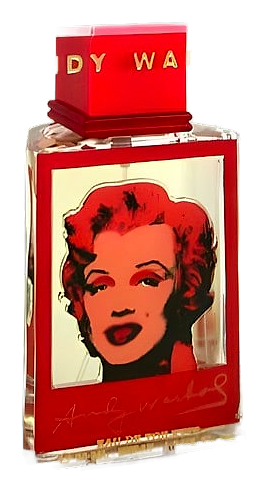
The Marilyn trio landed in 2001, Marilyn Bleu, Marilyn Rouge, Marilyn Rose. Three colors, three interpretations of the same iconic subject. Rouge translates as red, but this fragrance is less about boldness and more about what happens when you take an overexposed image and make it quiet. Cécile Matton built the composition around rose and sandalwood, jasmine and blackcurrant. Powdery-fruity, not powdery-sweet. Intimate rather than announced. The Warhol collection treated Marilyn Monroe as material, yes, but this one treats her as a feeling rather than a face.
Four materials make this work: rose for emotion without heaviness, sandalwood for warmth without woodshop, jasmine for creaminess that doesn't overwhelm, and blackcurrant for a tartness that keeps everything honest. The powdery-fruity accord isn't a trick, it's the natural result of these four meeting on skin. Blackcurrant adds brightness that rose alone would lose. Sandalwood prevents jasmine from floating away entirely. Matton understood that Marilyn as a concept is already sweet. The fragrance needed a counterargument.
The evolution
Rose hits first, bright and almost tart from whatever blackcurrant brings along. Thirty minutes in, jasmine enters the room and the composition softens without losing structure. The powdery quality announces itself around the forty-minute mark, that's when sandalwood takes over as the undertow. Two hours in, you've got a woody-floral that sits close to skin and stays there. The drydown is skin-warm and powdery, intimate, the kind of presence that requires proximity. Lasts four to six hours on most, closer to four on dry skin, never filling a room but never disappearing either.
Cultural impact
Marilyn Rouge exists at the intersection of fine art and commercial fragrance, representing Andy Warhol's ongoing exploration of celebrity culture and mass reproduction. The Warhol fragrance collection, launched in the early 2000s, applied his signature silkscreen aesthetic to the world of scent, treating perfume bottles as collectible art objects rather than mere consumer products. Marilyn as a subject matter carries particular weight given Warhol's iconic 1960s Marilyn Monroe portraits, and the fragrance line continues his examination of how celebrity images become interchangeable symbols.