The Story
Why it exists.
The beginning
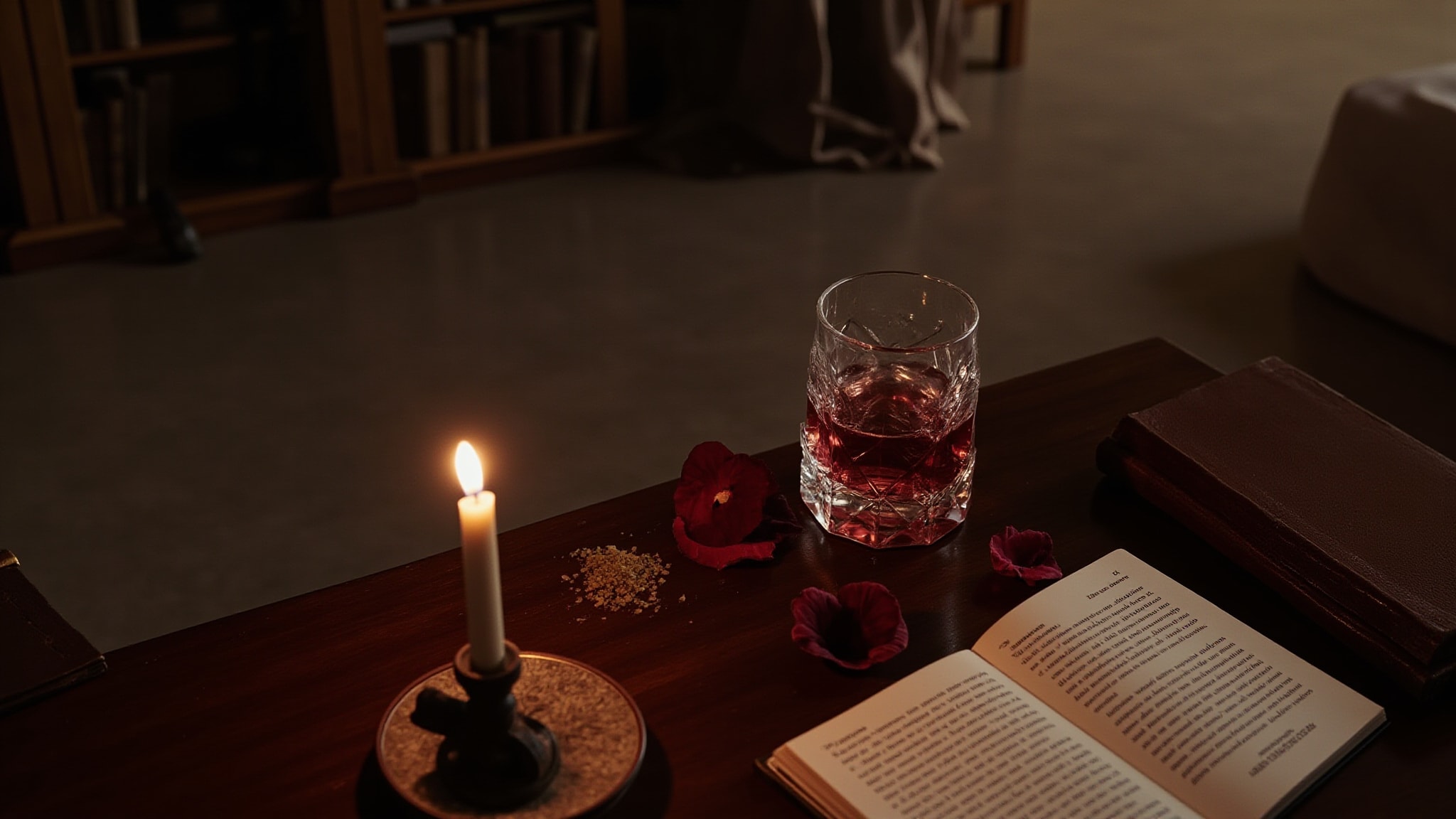
Anatole Lebreton founded his Provençal house in 2014 with a stated commitment to frank, personal fragrance. The name Rubaiyat nods to the eleventh-century Persian mathematician and poet Omar Khayyam, whose verses in the Rubaiyat celebrate wine, contemplation, and the fleeting nature of pleasure. This literary lineage informs the fragrance's character: it values the present moment, the company of friends, and the amber warmth of a life fully lived. Lebreton's approach treats each perfume as a personal statement rather than a commercial calculation.
The choice of rose and cardamom for an opening reflects a specific olfactory logic: both materials share citrus-adjacent aromatic qualities that create immediate brightness without artificial sweetness. Black pepper and raspberry in the heart represent a spicy-fruity pairing that pays homage to classic chypre structures while remaining firmly in the present. The wine lees note bridges these two phases, its fermented quality echoing the vintage spirit suggested by the Rubaiyat name. Myrrh, cashmeran, and ethyl maltol in the base represent a modern approach to warm, skin-close fragrance, where resinous depth meets musky softness and a hint of gourmand warmth.
The evolution
Rubaiyat begins as a dialogue between rose and cardamom, two materials that share an unexpected kinship through their mutual brightness. The rose does not arrive as a Givaudan rose-absolute pastiche but rather as something cleaner, more agrarian, while cardamom introduces a mentholated spice that cools the nostrils. Over the first hour, black pepper emerges as the dominant voice in the heart, its warmth amplified by raspberry's fruity tartness. The wine lees note adds a fermented, slightly acetic quality that some wearers compare to the smell of a newly opened bottle of natural wine. As the hours pass, myrrh enters the framework, its smoky-resinous presence softening the fruit and spice, while cashmeran and ethyl maltol work together to create a warm, slightly sweet foundation that lingers at the skin's surface for six or more hours.
Cultural impact
Rubaiyat’s literary nod to the Persian poet Omar Khayyam has sparked conversation among niche‑fragrance enthusiasts, positioning it as a scent for those who appreciate poetry as much as perfume. Its unusual wine‑lees accord often appears in forums as a point of intrigue, drawing collectors who seek a fragrance that feels both scholarly and sensually daring.