The Story
Why it exists.
The beginning
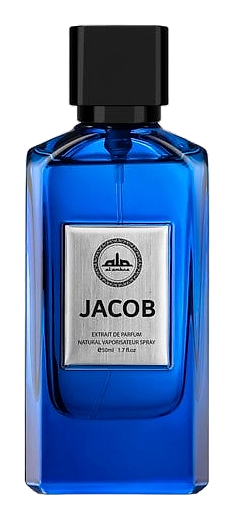
Jacob landed in 2020 from Al Ambra, a house whose catalogue draws on a Middle Eastern aromatic vocabulary. It's an oriental-spicy composition listed at extrait de parfum, the denser format built to sit closer to skin than a standard eau de toilette. The juice opens with cardamom and cinnamon up top, saffron and black pepper at the core, tobacco, patchouli, and cedar underneath. The name suggests something ancient, something biblical, a figure who wrestled through the night and walked away changed. That's the energy. Al Ambra's range stretches from amber-rich compositions to oud-heavy pieces to lighter citrus-woody blends, and Jacob leans fully into the warm side of the spectrum without tipping into anything smoked-out or heavy-handed.
What makes this composition work is the restraint with the saffron. Saffron can go twee, powdery, even soapy in the wrong hands, and pairing it with black pepper keeps it grounded. The pepper sharpens the saffron's leathery facets instead of letting them collapse into something sweet. Then the base trio pulls everything down into earth. Tobacco here reads dry and leaf-like rather than smoky-sweet. Patchouli adds a dark, slightly bitter hum. Cedar holds the structure. The whole thing stays in spice territory without tipping into the dessert trap that cinnamon fragrances often fall into.
The evolution
The first 30 minutes are a cinnamon-cardamom-pepper wall, bright and assertive, almost aggressive in cold air. Sillage sits moderate for the first couple of hours, close enough that people leaning in catch it but it doesn't project across a room. Then something shifts around the 2-hour mark. The top spices soften, the saffron deepens into something warmer, and the tobacco starts to surface with a dry, leafy quality. By hour 3 to 4 the composition has settled into its drydown: tobacco, patchouli, cedar, with a ghost of cinnamon warmth still hanging on. After 5 hours it's mostly skin-close, a faint woody-spicy trace. The next morning, a light dusting of cedar and tobacco remains on fabric. Not a beast-mode performer, but honest for its concentration. The fade is gradual rather than abrupt, and the later stages lean woody and dry rather than disappearing entirely.
Cultural impact
Jacob lives in the spicy-oriental territory that regional perfumery has shaped over decades, and it carries that lineage with confidence. Wearers gravitate to it as a cold-weather workhorse, the kind of fragrance that earns its place in a rotation rather than sitting pretty on a shelf. It's not a statement piece, it's a staple piece. Compared to heavier regional fragrances, Jacob carries its spice-forward warmth without the weight of dense oud or thick amber. Polarizing for its cinnamon-pepper intensity, loved for being honest about what it is. The composition doesn't try to be everything, and that directness is part of the appeal.