The Story
Why it exists.
The beginning
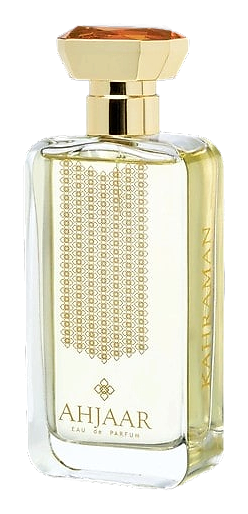
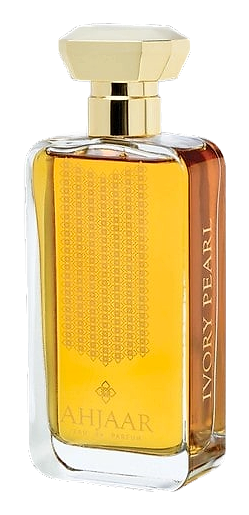
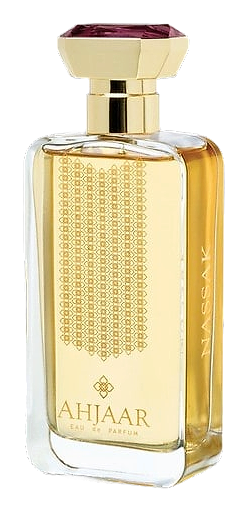
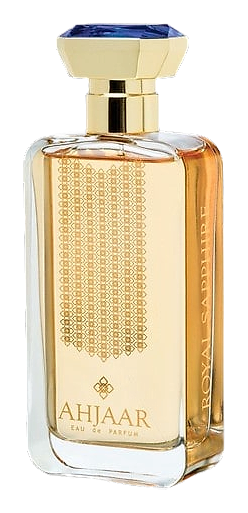
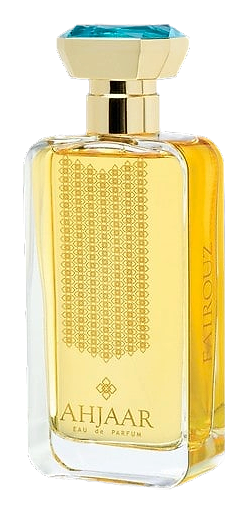
Fairouz arrives as part of Ahjaar's stated identity: a collection of royal oriental aromas crafted by a prestigious French perfumery, built using the most desirable ingredients of the East. That brief sets the terms for everything that follows, because Fairouz doesn't reach for the obvious Eastern signifiers. Where compositions in this register tend to lean on rose, saffron, or thick amber, Fairouz pulls inward. Its territory is the cool weight of stone, the hum of resin, and the particular confidence of a composition that doesn't need to announce itself. The Eastern materials show up, but they're treated with a discipline that keeps the composition tight, composed, and increasingly quiet. No sweetness to lean on. No floral lift to rescue the structure.
What makes Fairouz structurally interesting is the inversion at its core. Musk and violet open the composition, materials usually treated as supporting textures, not leads. That choice forces the woody and resinous materials below to do all the conversational work from minute one. The oakmoss in the heart is doing heavy lifting in an era where most niche compositions have moved away from it. And the agarwood in the base isn't there to dominate. It's there as ballast, anchoring a composition built around the cooler, greener materials.
The evolution
The first ten minutes belong to musk and violet, and they don't behave like a polite overture. The musk reads cool and skin-close from the start, almost like a chill in the air. Violet dusts over it, powdered and faintly sweet, but never floral in the obvious sense. There's an almost mineral edge to the opening, a cold clarity that doesn't need any visual cue to land. By the thirty-minute mark the oakmoss steps in and the composition tips into its heart. This is where Fairouz settles in and starts to feel lived-in. Patchouli arrives with a touch of bitterness, vetiver brings that dry, rooty greenness, and sandalwood rounds the edges into something warmer. The violet doesn't leave. It gets absorbed into the oakmoss and starts reading as a kind of shadow rather than a note. Past the two-hour mark, the agarwood surfaces. Quietly at first, then with increasing insistence. It doesn't roar.
Cultural impact
Fairouz sits at the cooler, drier end of the composition spectrum, away from the sweet, dense, and heavily resinous territory that much of the Eastern-niche conversation tends to orbit. Its profile leans on oakmoss, violet, and the cooler wood facets of agarwood, which keeps it from reading as a typical crowd-pleaser. Wearer impressions tend to describe it as composed and quiet rather than loud, the kind of scent that earns attention through its structure instead of demanding it. It works well in settings where the brief calls for depth rather than volume, and where the materials themselves are allowed to carry the weight of the impression.