The Story
Why it exists.
The beginning
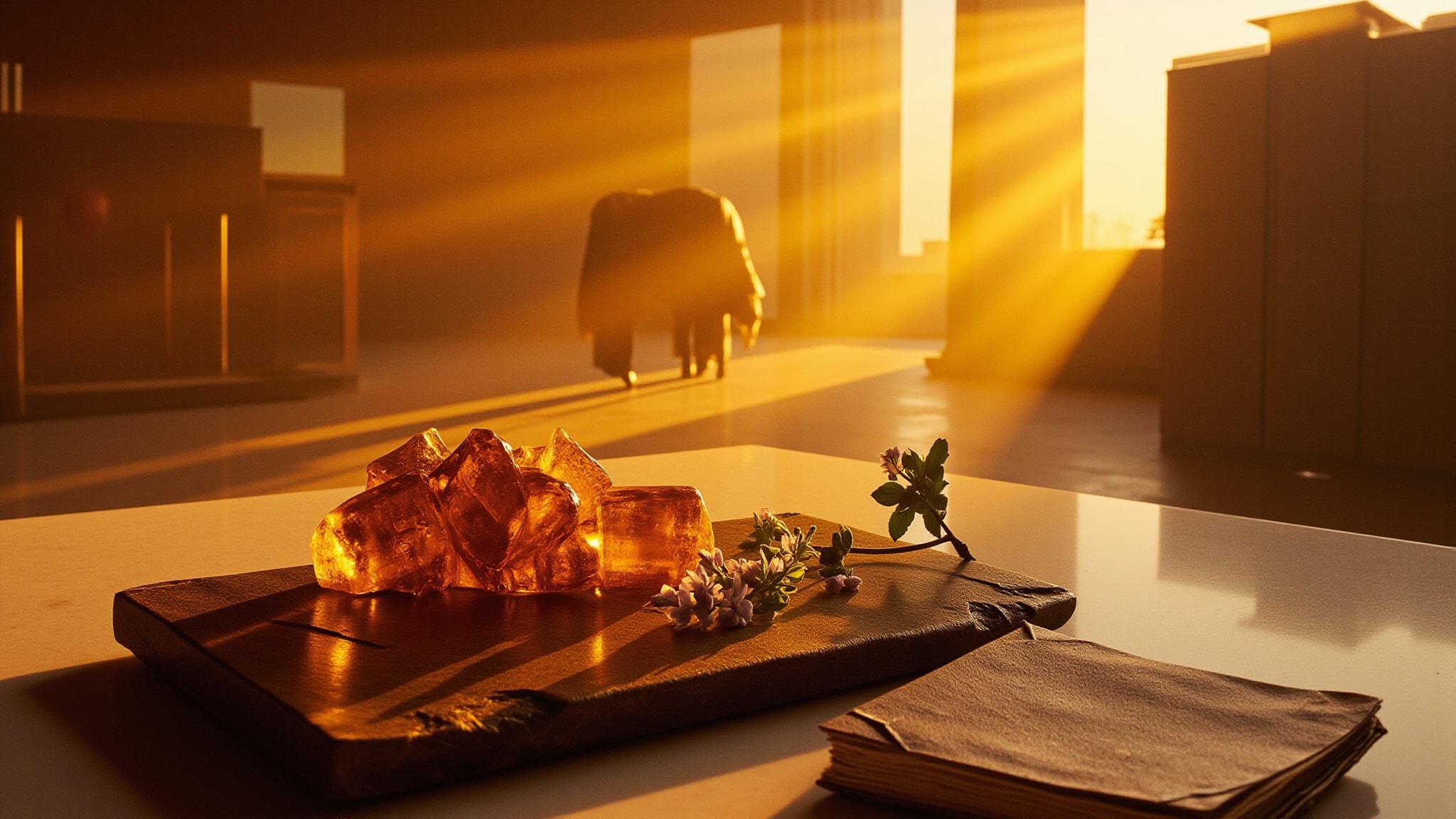
Amber Tapestry was built in 2016 as a study in facets, not a single amber accord. The brief was vintage: that pre-synthetic idea of amber as a weave of resins, florals, and skin-warm musks. The name says it plainly. A blend. Thread after thread, each one a different material, none of them hiding the seams. The formula reads like a private cabinet of curiosities. A bottle of heliotropin, a vial of benzoin that smells like vanilla left out in the sun, the kind of labdanum that arrives dark and almost geological. The point was never to invent a new amber. It was to gather the old ones and see what they said together. Each material was chosen for what it contributes to the whole, and the whole keeps shifting as the hours pass.
Amber Tapestry refuses the easy path. Labdanum, benzoin, and coumarin each carry their own resinous register, and Aftel lets them argue a little. Heliotropin adds a sugared-almond haze that softens the edges without flattening them. Then the castoreum and ambergris step in, not as accents but as architecture. The labdanum arrives first, dark and almost geological, giving the blend its weight. Benzoin layers in a warmer, vanillic sweetness, while coumarin brings a hay-like warmth that reads as almost edible.
The evolution
The first ten minutes belong to the mandarin, a brief bright peel that catches light before everything underneath takes over. Heliotrope arrives next, a powdery almond-cherry warmth that feels almost edible, before jasmine sambac cuts through with a creamy, slightly indolic sweetness. The pear keeps the heart from going dark. It adds a cool, fleshy lift, like biting into fruit on a warm afternoon. By the second hour, the base settles in. Labdanum and benzoin build a dense resinous floor, ambergris gives it salt and skin, and castoreum adds a leathery, musky depth that makes the whole thing feel lived-in. Coumarin hums underneath, a soft tobacco-hay sweetness. Six hours in, the florals are gone, but the amber blend remains. It clings to fabric, to hair, to the inside of a collar. The next morning, what's left is a warm, slightly sweet, faintly animalic ghost. It doesn't shout. It just stays.
Cultural impact
Amber Tapestry sits in a quiet corner of the niche world, the kind of fragrance that draws wearers who want vintage amber architecture without retro-clone packaging. Labdanum, benzoin, and coumarin stacked the way perfumers worked before synthetics took over, and the composition holds that lineage without apology. The castoreum and ambergris do real structural work here, acting as architecture rather than as accent notes. The heliotropin adds a sugared-almond softness that keeps the resins from feeling heavy or monolithic.