The Story
Why it exists.
The beginning
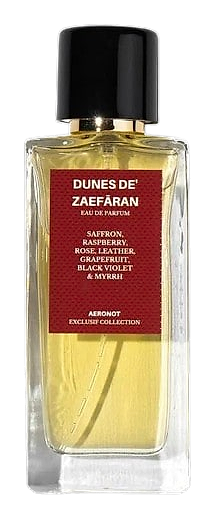
Dunes de Zaefarān arrived in 2022 as part of Aeronot's Exclusif Collection, the line reserved for its most narrative compositions. The name points straight at saffron, the za'farān itself, a spice long associated with luxury, ritual, and a particular kind of golden melancholy. The composition pairs that storied spice with raspberry brightness, grapefruit bite, leather and rose, then settles into a base of violet and myrrh. It's a desert made of texture rather than sand, built from the materials of spice markets and old trunks rather than actual dunes.
The unusual move here is the raspberry-saffron handshake up top. Adding raspberry pulls the spice toward something fruitier, almost cordial-like, opening a sweetness that saffron alone wouldn't reach. Leather and rose in the middle keep things grounded, then black violet does something few florals dare: it goes dark, powdery, and stays out of the way of the saffron story already in motion. The whole opening feels like a negotiation between bright and resinous, a brief conversation where neither note wins outright.
The evolution
The first fifteen minutes are a study in restraint. Saffron arrives first, dry and a little waxy, then raspberry opens it up, juicy but not candied, more like fruit leather than jam. Grapefruit cuts in around the twenty-minute mark, bitter and bright, and for a brief window the whole thing reads almost citrus-clean. That's the misleading part. The leather starts surfacing as the citrus fades, smoky and cured, joined by a rose that leans toward the denser, more traditional side of the flower rather than its dewy face. By the two-hour mark the composition has settled into its real register: dark, resinous, warm. Myrrh shows up with its church-incense weight, and black violet arrives underneath, powdery and slightly metallic, behaving like a dark floral that's been asked to keep quiet while the resins do the talking.
Cultural impact
Dunes de Zaefarān sits within Aeronot's Exclusif Collection, the line the house reserves for its most storied compositions. The fragrance treats saffron as something to be explored rather than ornamented, pairing it with materials that speak the same dialect: raspberry for the bright exchange at the market stall, leather for the cured weight of old luggage, rose and violet for the floral undertone that runs beneath so many of the world's spice traditions. Myrrh arrives as the closing gesture, a resinous hum that suggests ceremony without literal reference.