The Story
Why it exists.
The beginning
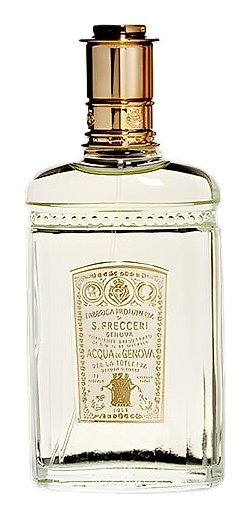
1853 Lady arrives in 2006 as Stefano Frecceri's answer to something the brand had never quite attempted before. The house built its name on clear, sparkling colognes, citrus-forward, Mediterranean, democratic. Lady takes that inheritance and complicates it. Where Colonia Classica opened bright and stayed bright, this fragrance opens bright and then refuses to stay there. Frecceri reaches for patchouli and amber, layers them against a sandalwood base that smooths the transition, then grounds everything in incense, oakmoss, and myrrh. It's the Acqua di Genova house code, but rewritten in a darker key.
What makes this composition unusual is the bridge between its two halves. Lavender and bergamot give the opening genuine clarity, the brand's signature, intact. But pepper shifts the register mid-opening, introducing a warmth that the citrus alone wouldn't carry. Then sandalwood does the invisible work: its creamy, quiet presence smooths the handoff to the heart so completely that you don't notice patchouli taking over. The base compounds this with incense and myrrh, materials that smell like the end of something, like the last ember. Oakmoss ties it to a classical perfumery tradition that most modern houses have abandoned for IFRA compliance reasons.
The evolution
The opening announces itself for perhaps twenty minutes: bergamot and mandarin bright, lavender cutting clean through. Pepper arrives around the three-minute mark and stays longer than expected, it doesn't fully disappear into the heart so much as diffuse through it. By the thirty-minute mark, patchouli has emerged as the dominant character, turning the composition earthy and grounded. Amber follows, adding warmth without sweetness. The sandalwood keeps the whole thing creamy, preventing the patchouli from reading too heavy. By hour two, the citrus has receded completely. What remains is incense and myrrh, resinous, smoky, intimate. The oakmoss surfaces last, around hour four, adding a mossy green depth that extends the drydown to six or eight hours on most skin types. The next morning, there's a faint trace on fabric: warm, resinous, quietly persistent.
Cultural impact
1853 Lady arrived at a moment when Italian niche perfumery was seeking to reclaim classical territory from French dominance. While houses like Acqua di Parma held market share through accessible citrus colognes, Acqua di Genova took a different path with this 2006 release. The decision to feature oakmoss prominently ran counter to industry trends that favored modern, compliant materials. Stefano Frecceri's composition represented a deliberate archival approach, referencing the house's pre-IFRA heritage while maintaining wearability. This choice positioned the fragrance as a bridge between classical Italian perfumery's rich, mossy character and contemporary taste for cleaner profiles.