The Story
Why it exists.
The beginning
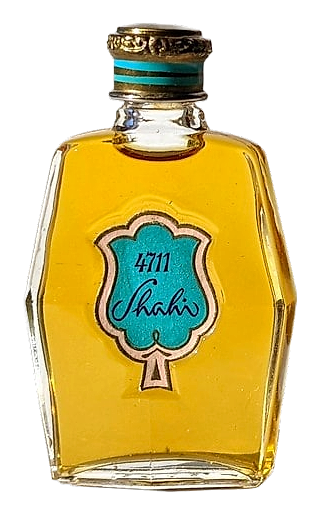
Shahi arrived in 1935, a decade when Cologne's oldest fragrance house was reaching beyond its signature citrus tonic into something more ambitious. The name itself carries a sense of grandeur, pointing the house somewhere it hadn't gone before, toward compositions with gravity and intention. Where the house's traditional offerings sat in lighter territory, Shahi went deeper, richer, built on a foundation of resin and warmth that gave it presence from the first spray. It was the house's German precision applied to something denser, more layered, a cologne that wore its weight proudly and asked to be noticed rather than simply refreshed.
What gives Shahi its particular gravity is the frankincense paired with synthetic civet in the base. The mimosa and ylang-ylang contribute that golden, almost dusty sweetness, but the coriander sharpens the heart with a green spice that keeps the sweetness honest, pulling it back before it tips into the syrupy. The balsam and labdanum in the base ground everything in warmth, while the civet adds that animalic hum underneath, a low vibration that never rises above a whisper.
The evolution
On skin, the first twenty minutes are about that aldehyde-bergamot shock. Bright, almost metallic, like sunlight catching a polished surface. Then the aldehydes soften and the heart takes over. The ylang-ylang comes through golden and tropical, sun-warmed rather than sheer. The carnation adds clove-edged spice, dry and peppery at its edges. The frankincense rises slowly, resinous and meditative, taking its place beneath the florals like a held breath. After the first hour, the base asserts itself. Labdanum and balsam create warmth, the kind that feels lived-in rather than applied. The synthetic civet stays close to skin, giving everything a slightly animal edge, a soft musk that anchors the brighter notes. By hour four, the drydown is mostly ambergris and musk, soft and close, the fragrance retreating into something private.
Cultural impact
Shahi occupies an unusual place in the 4711 catalog, a richly resinous counterpoint to the house's lighter traditions. The cologne leans into dustiness, warmth, and a faintly dangerous undertone, the kind of scent that lingers in a room after its wearer has left. For anyone tracing the arc of mid-century German perfumery, it offers something rarer than the heavy orientals that would dominate later decades, an early, almost experimental attempt at depth from a house better known for clarity.