Wintersweet
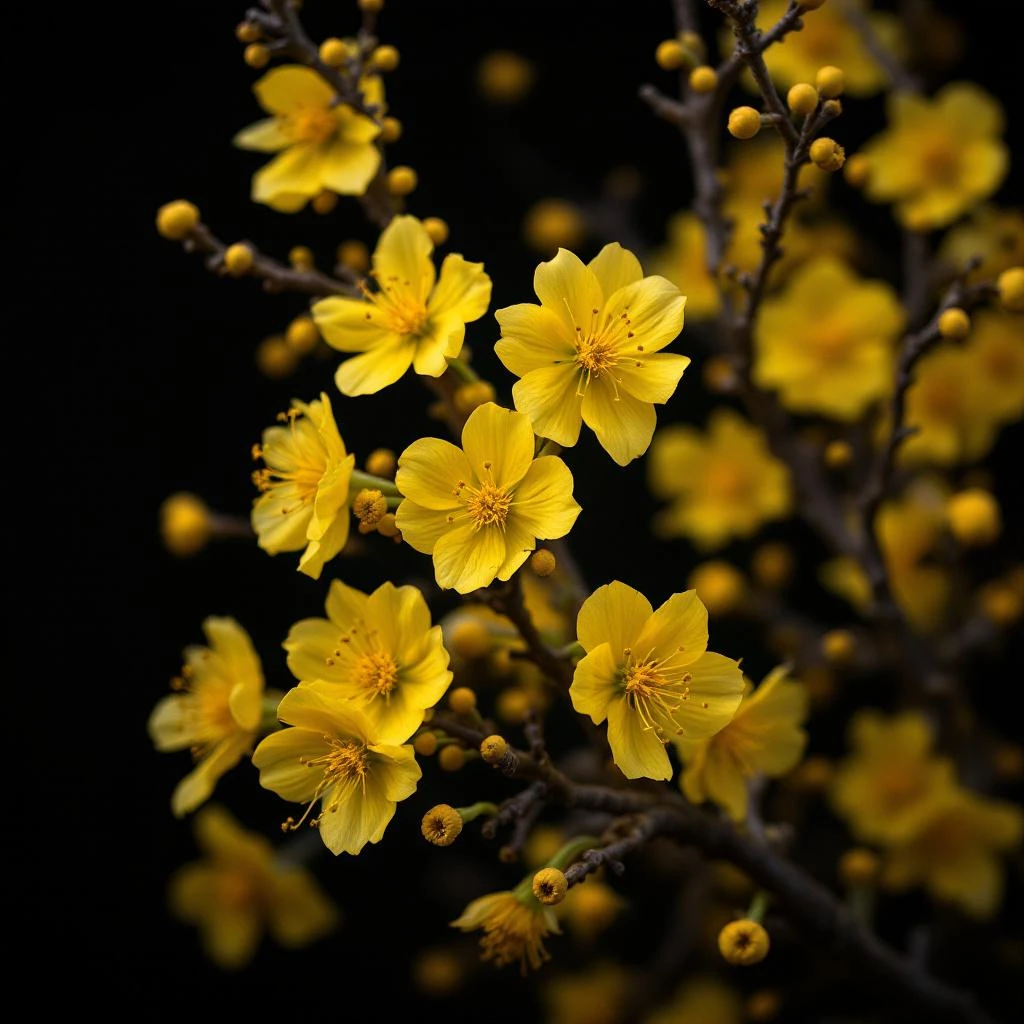
Wintersweet, the winter‑blooming shrub native to China, releases a crisp green scent brushed with honeyed warmth and a faint powdery edge. Its rare fresh profile appears when most plants lie dormant, offering perfumers a bright, cool accent that endures through the cold season. The oil captures the essence of early frost, delivering a subtle sweetness that balances bright foliage with a lingering, comforting depth. Its nuanced profile makes it a favorite for winter‑themed compositions and niche blends seeking natural clarity.
Character
How it smells
Winter’s green whisper, sweetened by honey.
Wintersweet blooms on bare branches in December, and its essential oil can be extracted from fresh buds within 48 hours of picking, preserving its fleeting aroma. The plant’s fragrance was prized by Tang dynasty courtiers, who used it to scent winter banquets, believing the scent warded off cold spirits.





Origin
China
Wintersweet (Chimonanthus praecox) has been cultivated in China for over a thousand years, where it appears in classical poetry as a symbol of resilience in winter. Ancient Chinese texts from the Tang dynasty describe the plant’s fragrant branches being hung in palace chambers to mask the chill of the season. By the early 1900s, European traders introduced dried wintersweet buds to France, where perfumers experimented with the scent in winter‑themed blends.
A 1913 Parisian trade catalogue listed a "Chimonanthus absolute" as a novel top note, marking its entry into Western perfumery. The ingredient gained popularity in the mid‑20th century among niche houses seeking natural alternatives to synthetic winter notes. Throughout its history, wintersweet has remained valued for its ability to evoke fresh cold air while delivering a subtle sweetness, a combination that few other natural materials can match.
Today, sustainable cultivation in Chinese provinces such as Hubei and Jiangsu supports both traditional uses in tea and incense and modern applications in high‑end fragrances.
Wears it best
Fragrances featuring Wintersweet

Good to know
Questions, answered
The essentials on Wintersweet in perfumery: how it smells, where it comes from, and how it behaves on skin.
What scent profile does wintersweet offer?
Wintersweet delivers a crisp green note with a subtle honeyed warmth and a faint powdery nuance. In 2021, GC‑MS analysis recorded linalool at 12% and coumarin at 3%, giving the oil its characteristic fresh‑spicy edge. The aroma balances bright foliage with a lingering sweet undertone, making it suitable for both top and heart layers.
How is wintersweet extracted for perfumery?
Solvent extraction captures the flower’s volatile compounds into a thick absolute. In 2019, Chinese producers used hexane on 500 kg of fresh buds and recovered 6 kg of absolute with a 1.2% yield. The process preserves the delicate green‑spicy profile. Low temperature conditions prevent oxidation, ensuring the scent remains true to the living bloom.
Which part of the plant provides the fragrance?
Perfumers use the fresh flower buds of wintersweet. A 2020 field study recorded an average bud weight of 0.8 g, and each kilogram yields roughly 12 g of absolute. The leaves contain far lower aromatic content and are not harvested. Harvesters pick the buds early in the morning to lock in peak freshness.
Where does wintersweet originate?
Wintersweet is native to central and eastern China. Botanical surveys from 2018 list the species across provinces such as Hubei (30°N, 114°E) and Jiangsu (32°N, 119°E). The plant thrives in temperate woodlands and river valleys. Its winter bloom provides a rare fragrance when most plants lie dormant, attracting pollinators in cold months.
Is wintersweet considered a sustainable ingredient?
Wintersweet harvest follows a seasonal cycle that allows wild populations to regenerate. In 2022, a Chinese cooperative reported a 15% increase in cultivated acreage while maintaining a 90% wild‑stock preservation rate. The practice balances supply with ecological health. Certification bodies monitor harvesting methods to ensure minimal impact on native habitats.
When did wintersweet first appear in Western perfumery?
Wintersweet entered Western formulations in the early 20th century. A 1913 trade catalogue from Paris listed a “Chimonanthus absolute” as a novel top note for winter‑themed blends. Its introduction expanded the palette beyond traditional rose and citrus. Perfume houses valued its ability to convey crisp cold air without sacrificing warmth.
How does wintersweet behave in fragrance blends?
Wintersweet anchors bright top accords and bridges them to warm heart notes. A 2021 blending trial showed that 5% wintersweet absolute increased perceived freshness by 18% in a citrus‑spice composition. It also stabilizes volatile citrus oils. The note remains discernible for several hours, adding depth without overwhelming the blend.
Are there any safety considerations when using wintersweet oil?
Wintersweet absolute contains low levels of coumarin, which can cause skin sensitization in susceptible individuals. In a 2017 dermatological panel, 2% of participants reported mild irritation after a 24‑hour patch test at 0.5 mg/cm². Dilution below 1% in a carrier oil mitigates risk.