Character
How it smells
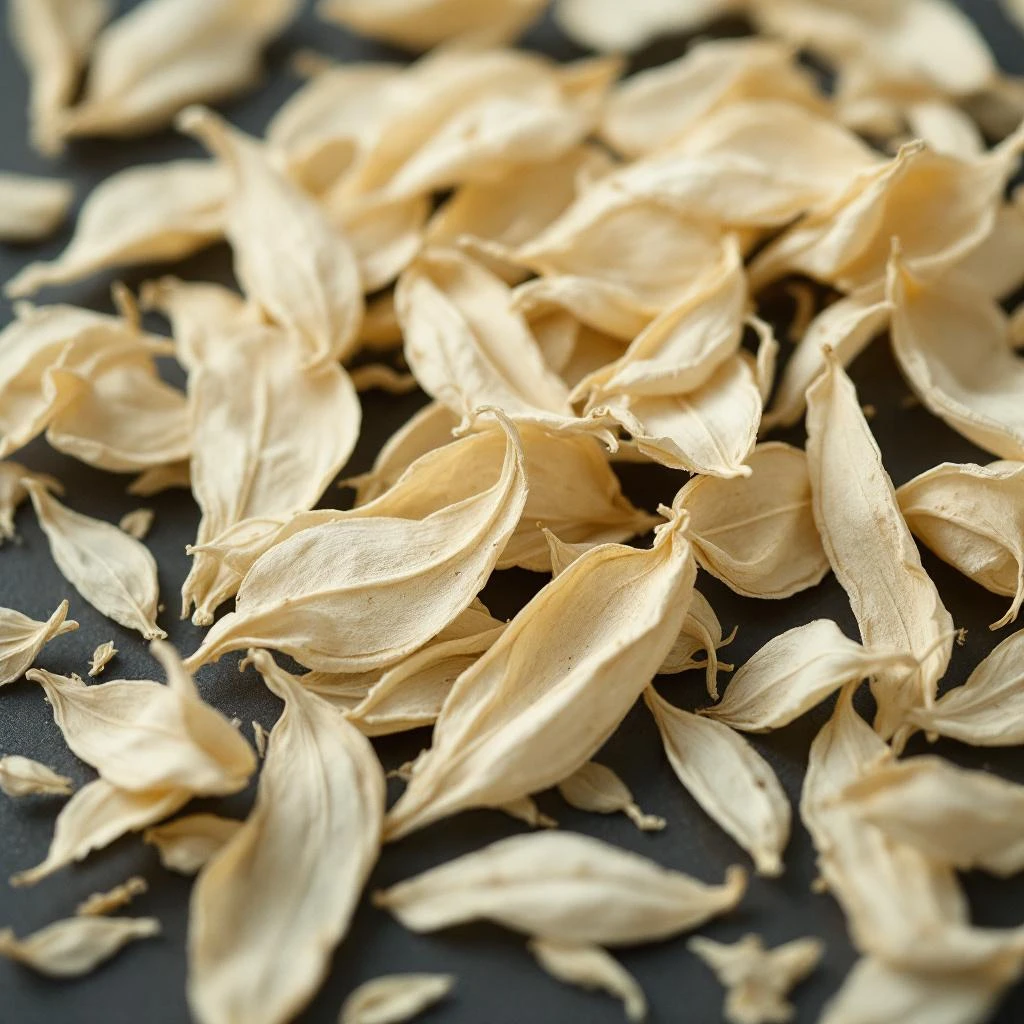
The hidden bloom of the tea plant, captured in fragrance.
Tea plants take 3-5 years before they flower, and since pruning promotes leaf growth over blooms, their flowers are a rare, fleeting harvest.
Origin
China
While white tea as a beverage has ancient Chinese origins, white tea blossom as a fragrance ingredient is a modern discovery. For centuries, tea cultivators focused entirely on the leaves, pruning plants to maximize leaf production rather than allowing flowering. The flowers appeared only on unharvested plants, making them a lesser-known aspect of the tea plant.
East Asian cultures associated tea flowers with purity and mindfulness, symbols rooted in tea ceremony traditions, though perfumers largely ignored them. The shift came in the late 20th and early 21st centuries when perfumers began exploring the full potential of tea beyond its leaves. Interest in tea-scented fragrances grew, and white tea blossom emerged as a prized material for its delicate, calming qualities.
Today, perfumers value the blossoms for their green-floral elegance and their ability to bridge different fragrance families. The ingredient represents a rediscovery rather than a new creation, bringing an ancient plant into modern perfumery in an entirely new way.
Good to know
Questions, answered
The essentials on White Tea Blossom in perfumery: how it smells, where it comes from, and how it behaves on skin.
What is white tea blossom in perfumery?
White tea blossom is the flower of the tea plant, Camellia sinensis. It provides a delicate, green-floral aroma with subtle tea undertones. Perfumery uses it to add a refined, calming quality to fragrance compositions.
What does white tea blossom smell like?
It smells light and delicate with green-floral notes and slight tea undertones. The scent is soft, fresh, and slightly vegetal, often described as calming and harmonious in blends.
Where does white tea blossom grow?
White tea blossom comes from Camellia sinensis, cultivated primarily in China, India, and Japan. The plant thrives in high-altitude regions with misty conditions, particularly in Yunnan and Fujian provinces in China.
How is white tea blossom extracted for perfume?
Enfleurage or solvent extraction captures the fragrance without heat damage. The flowers are too delicate for steam distillation. Solvent extraction produces an absolute with the true floral-green character and tea undertones.
Why is white tea blossom rare in perfumery?
Tea plants rarely flower in cultivation because regular pruning promotes leaf growth over blooms. Flowers only appear on unharvested plants, making natural blossoms scarce. Most white tea blossom materials in perfumery are high-quality synthetics.
What fragrances pair well with white tea blossom?
White tea blossom harmonizes naturally with green tea notes, white florals like jasmine and muguet, and aquatic notes. Its subtle character works well with citrus, light musks, and cedar in airy, fresh compositions.
How does white tea blossom differ from white tea leaf?
Both come from Camellia sinensis but offer different scent profiles. The blossoms provide a delicate, fleeting floral quality, while the leaves deliver a fuller, more herbaceous tea character with more pronounced green notes.
Is white tea blossom natural or synthetic in perfume?
Natural white tea blossom absolute exists but remains extremely rare due to limited flower availability. Most perfumery uses synthetic recreations that accurately capture the delicate green-floral, tea-toned scent profile.





