White Royal Lily
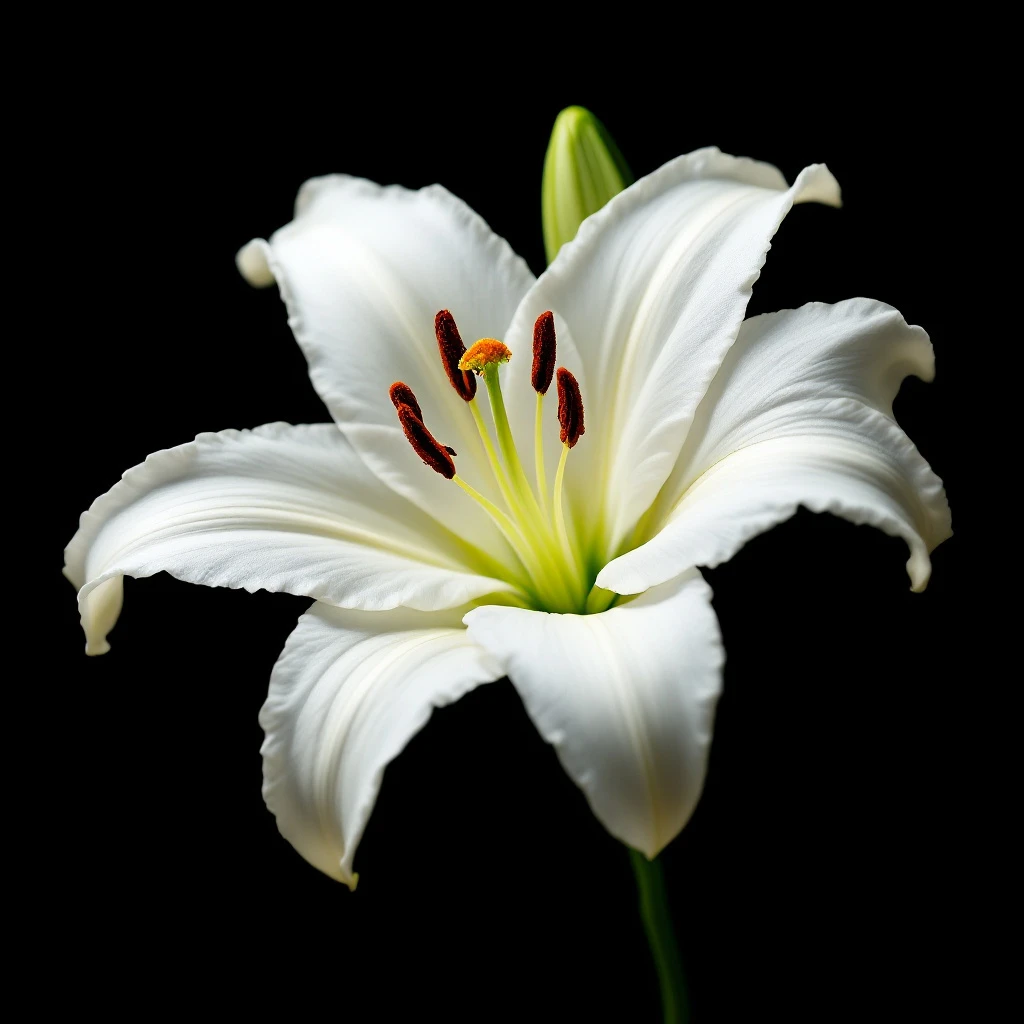
White Royal Lily carries an intoxicating nectar sweetness balanced by powdery green undertones. Despite its prominence in fine perfumery, this flower is technically mute—its scent cannot be captured through traditional methods. Perfumers must reconstruct its essence, making each interpretation a careful act of olfactory translation.
Character
How it smells
The flower you smell but cannot extract.
White lily ranks among the few flowers perfumers call 'mute'—its delicate aroma vanishes entirely during steam distillation, leaving nothing behind.




Origin
Mediterranean region
White lilies have held symbolic weight across civilizations for millennia. Ancient Greeks associated them with purity and the divine feminine, while Roman tradition linked them to Juno, queen of the gods.
Despite their visual prominence in ancient gardens and temples, white lilies remained absent from perfumery until relatively recently. The flower only gained traction in the 19th century, when perfumers began experimenting with recreating its elusive fragrance.
Interestingly, lily of the valley, a separate but related white flower, inspired its own cultural phenomenon—elegant young French men of the 16th and 17th centuries earned the nickname 'muguets' in tribute to the flower's fresh, springtime scent. The distinction matters: true white lily requires synthetic reconstruction, while lily of the valley can be extracted and used more directly.
Wears it best
Fragrances featuring White Royal Lily
Brands
Brands known for White Royal Lily
Good to know
Questions, answered
The essentials on White Royal Lily in perfumery: how it smells, where it comes from, and how it behaves on skin.
Can white lily essential oil be made through steam distillation?
No. White lily is classified as a mute flower—its aromatic compounds degrade and evaporate during steam distillation, yielding no usable extract. Perfumers use synthetic recreation instead.
How do perfumers capture the scent of white lily?
They reconstruct it using synthetic aroma chemicals like lilial and hydroxycitronellal. Solvent extraction produces absolutes, but the most accurate lily notes come from laboratory recreation.
Does white lily appear in classical perfumery texts?
Rarely by name. While lilies held symbolic importance in ancient cultures, their mute nature meant they contributed little to historical perfumery until synthetic chemistry emerged.
What does White Royal Lily smell like?
The scent combines sweet, almost narcotic floral nectar with crisp green notes and a soft powdery finish. It reads as creamy and slightly waxy, with less sharpness than lily of the valley.
Is White Royal Lily the same as lily of the valley?
No. These are botanically distinct flowers. Lily of the valley can be extracted naturally; white lily cannot. The two share green, fresh facets but differ in sweetness and intensity.
Which perfume families commonly use white lily?
White florals feature prominently in oriental and chypre compositions. White lily also appears in modern florals, where its powdery sweetness softens sharper white blooms like jasmine.
Why is white lily considered challenging to work with?
The gap between its visual beauty and extractable scent frustrates perfumers. Creating a convincing white lily note requires balancing multiple synthetic materials to mimic natural complexity.



