Viooltje
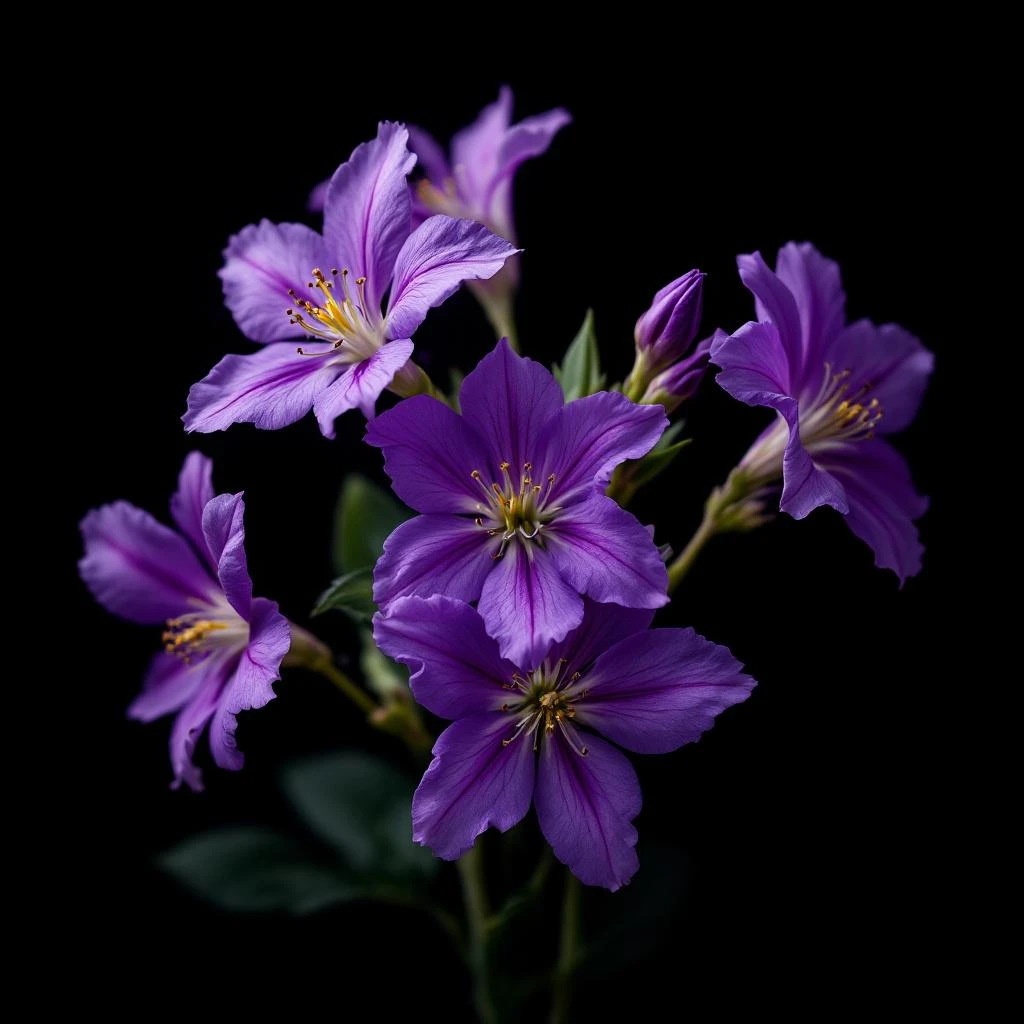
Violet absolute captures the tender, powdery sweetness of Viola odorata petals—delicate yet tenacious, with a cool floral character that lingers like morning dew on fresh flowers.

Character
How it smells
Tender petals, cool and powdery-sweet.
One ton of violet petals yields roughly 1–2 kg of absolute, making natural violet one of the most labor-intensive perfume materials.






Origin
France
Violet held a singular place in Victorian and Edwardian perfumery, when nosegays of sweet violets were ubiquitous across European courts and parlors. The 1857 edition of The Art of Perfumery noted brisk commercial demand for violet essence, even then challenging to produce in quantity. Grasse, France, became the epicenter of violet cultivation and processing, where flower workers—often women—stripped petals for fragrance houses that supplied Worth, Caron, and Guerlain.
Jicky (1889) incorporated violet alongside lavender and coumarin, marking one of perfumery's first deliberate natural-synthetic pairings. By the 1920s, violet featured prominently in Caron's Tabac Blond and Patou's Joy—yet the high cost of natural absolute pushed perfumers toward ionone isolates, synthesized aroma chemicals that reproduce violet's character at scale.
Wears it best
Fragrances featuring Viooltje
Brands
Brands known for Viooltje
Good to know
Questions, answered
The essentials on Viooltje in perfumery: how it smells, where it comes from, and how it behaves on skin.
What does violet smell like in perfume?
Violet smells cool, powdery, and tenderly sweet with a floral freshness that recalls freshly picked petals. The signature note comes from ionones, which lend a slightly carrot-like, green undertone distinctive to the flower.
Is violet in perfume natural or synthetic?
Both exist. Natural violet absolute from Viola odorata petals is rare and costly. Most violet accords today use synthesized ionones—aroma chemicals that are chemically identical to molecules found in the actual flower.
Why is natural violet absolute so expensive?
Yield is extremely low. Roughly one ton of violet petals produces just 1–2 kg of absolute, and each flower must be harvested by hand at peak freshness to preserve the delicate aroma compounds.
Which perfumes made violet famous?
Guerlain's Jicky (1889) was an early landmark. Caron's Tabac Blond, Patou's JOY, and Molinard's Hovenia each showcased violet in distinct ways throughout the 20th century.
What part of the violet plant is used for fragrance?
Fragrance production uses only the flower petals of Viola odorata, the sweet violet species. Leaves and stems contain negligible aromatic compounds by comparison.
How do perfumers extract violet absolute?
Freshly harvested petals undergo solvent extraction—typically hexane—which pulls aromatic compounds and waxes into a concrete. Alcohol re-extraction isolates the absolute from the waxy residue, yielding a concentrated aromatic material.
When did violet first enter perfumery?
By the mid-19th century, violet was already commercially significant. The 1857 Art of Perfumery documents active trade in violet essence, and by the 1880s violet appeared in landmark fragrances like Guerlain's Jicky.
What are ionones, and why do they matter for violet?
Ionones are aromatic molecules that constitute the core of violet's scent—alpha-ionone and beta-ionone alone can recreate violet's cool, powdery character. Synthesized ionones dominate modern perfumery because they offer consistency and affordability over natural absolute.





