Tomato Juice
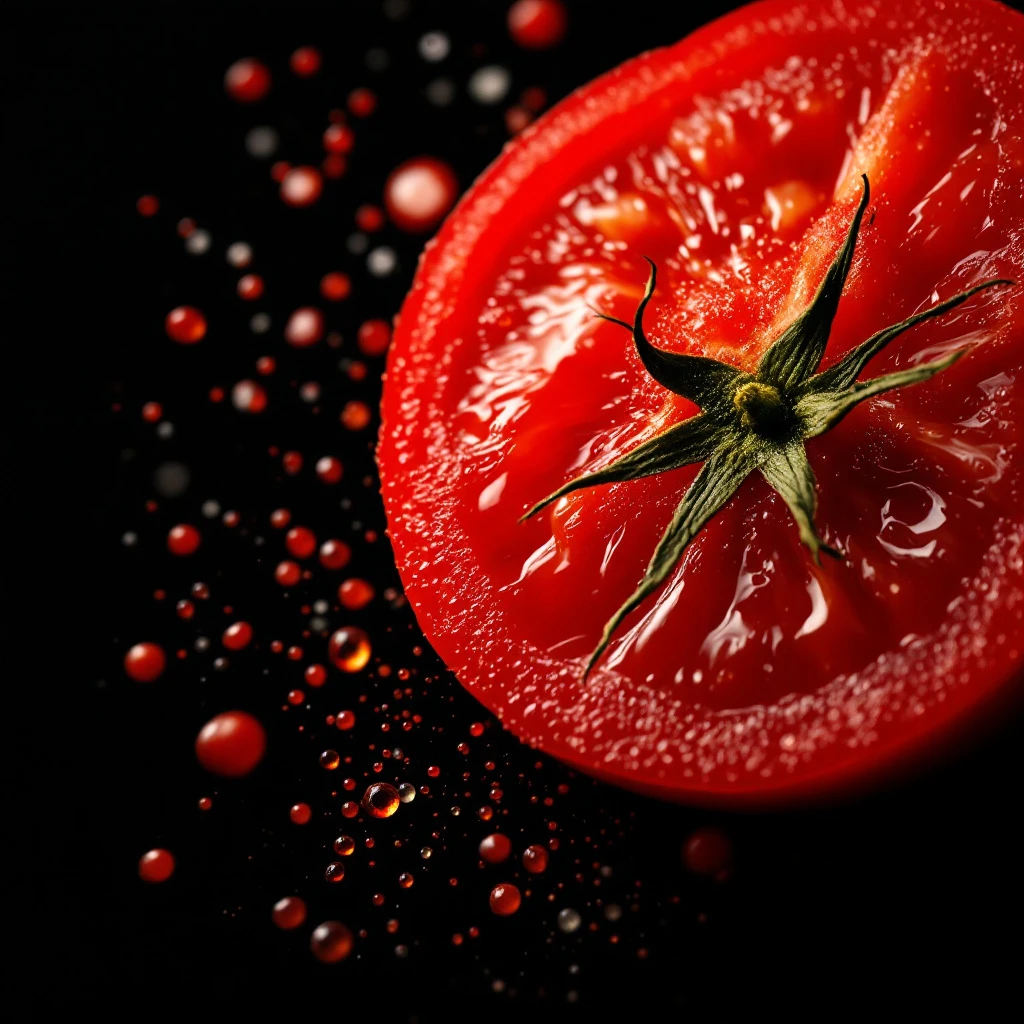
Tomato leaf absolute captures the vibrant, verdant essence of crushed tomato foliage, lending fragrances a startlingly fresh green character rarely found in any other botanical. This unusual material transforms perfumes with its immediate, living quality.
Character
How it smells
The startling green note hiding in plain sight
Tomato leaves contain the same compound found in freshly cut grass, giving the absolute its characteristic heady green scent.




Origin
Peru
The tomato plant originated in the Andes region of South America, where it grew wild for millennia before domestication. Spanish colonizers carried the fruit to Europe in the 16th century, though European initially treated it with suspicion, believing it poisonous. The plant gradually became integral to Mediterranean cuisine while its fragrant leaves remained largely unexploited.
Perfumery discovered tomato leaf as a source material during the 20th century expansion of green fragrance families. Modern fragrance houses began systematically exploring agricultural waste and overlooked botanicals, leading to tomato leaf absolute finding its place in perfumer palettes from the 1970s onward as a sophisticated alternative to synthetic green notes.
Wears it best
Fragrances featuring Tomato Juice
Brands
Brands known for Tomato Juice
Good to know
Questions, answered
The essentials on Tomato Juice in perfumery: how it smells, where it comes from, and how it behaves on skin.
Is tomato leaf absolute made from tomatoes?
No. The absolute derives from the plant's leaves and stems, not the fruit. Tomato fruit has a completely different aromatic profile, while the leaves produce that distinctive green, herbaceous character prized in perfumery.
What does tomato leaf absolute smell like?
It presents a powerful, immediate green aroma reminiscent of crushed tomato leaves. The scent combines fresh-cut grass, slightly bitter herbaceous notes, and earthy undertones from the plant stems. It reads as startlingly natural and alive in compositions.
Is tomato leaf absolute natural or synthetic?
Tomato leaf absolute is a fully natural material obtained through solvent extraction of fresh tomato plant foliage. No synthetic replication achieves the full complexity of the natural product, though isolated compounds exist.
Which fragrances feature tomato leaf absolute?
This material appears in numerous green and chypre fragrances, often lending freshness to women's perfumes. It works exceptionally well in compositions seeking a natural, garden-like quality without resorting to conventional green notes.
How is tomato leaf absolute different from tomato leaf accord?
Absolute refers to the actual extracted material from plant matter. An accord represents a constructed blend of natural and synthetic ingredients engineered to mimic the scent. True absolutes contain the full aromatic complexity of the source botanical.
Why is tomato leaf absolute so expensive?
Fresh leaves yield relatively little absolute, and they must be processed immediately after harvest before aromatic compounds degrade. Additionally, the foliage has low commercial value compared to the fruit, making supply chains limited.
Does tomato leaf absolute contain allergens?
Like most natural plant extracts, tomato leaf absolute may contain trace compounds that appear on fragrance allergen declaration lists. Responsible perfumers account for these when formulating and label accordingly.
Can I grow tomatoes for fragrance extraction?
Home extraction is impractical. The process requires fresh plant material processed immediately with industrial solvents. However, simply crushing fresh tomato leaves between fingers reveals the same aromatic compounds that perfumers capture.