Sweet Resins
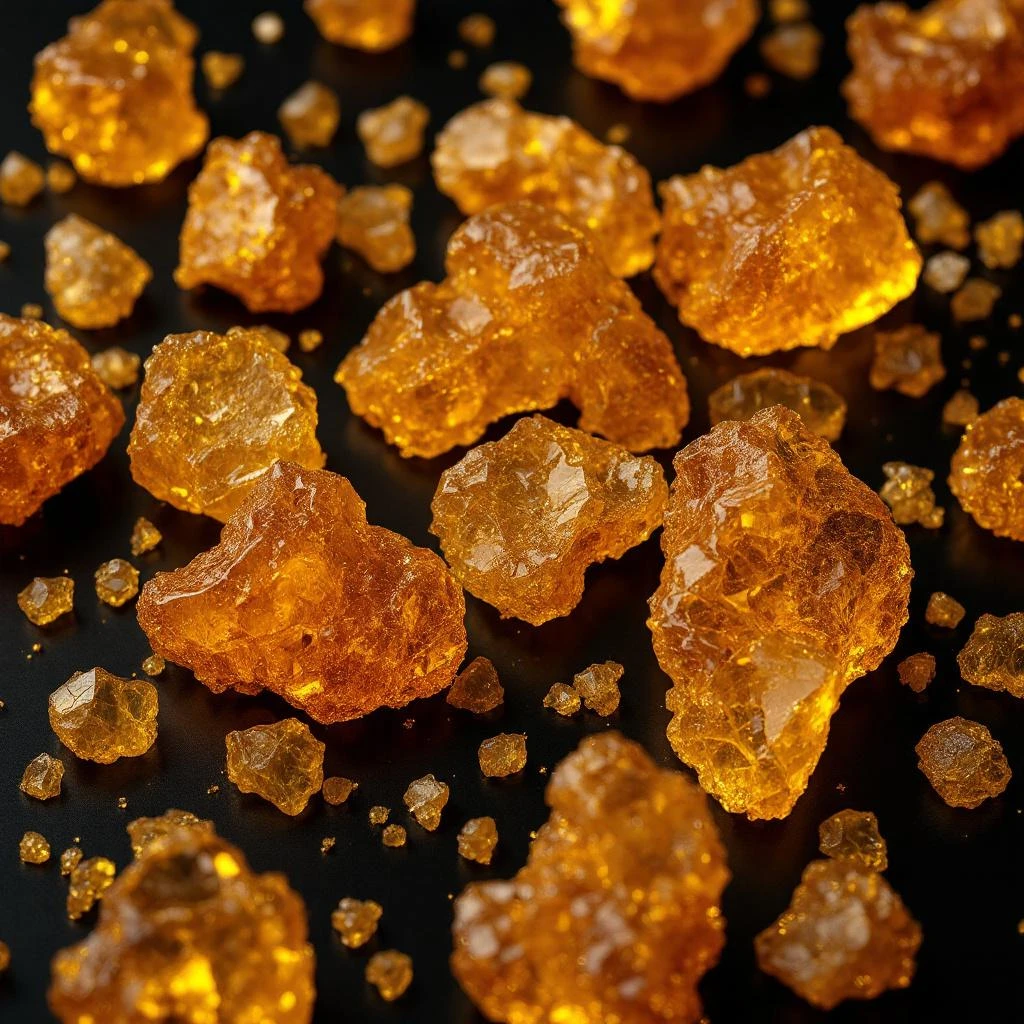
Sweet resins are the aromatic heart of perfumery's most enduring accords. Exuded by trees and shrubs across arid landscapes, these golden exudations deliver warmth, depth, and a lingering sweetness that anchors countless compositions.
Character
How it smells
Golden warmth from wounded trees
Labdanum resin was historically gathered by combing it from the beards and thighs of goats that grazed on Mediterranean cistus shrubs.
Pairs beautifully with



Origin
Multiple regions including Somalia, India, and Mediterranean basin
Resins rank among humanity's oldest aromatic materials. By 1500 BCE, Egyptian traders moved frankincense and myrrh along routes that stretched from Dhofar to the Nile delta. The Ebers Papyrus, an Egyptian medical text from around 1550 BCE, records recipes that combined resin with fatty oils for both ritual anointing and skin treatment. Mesopotamian perfumers dissolved resins to produce scented oils used in temple ceremonies.
Labdanum entered Mediterranean perfumery through Greek and Roman trade, valued for its fixative qualities. Byzantine merchants traded storax and benzoin along the Silk Road, where these resins traveled toward China and India for incense and medicine. During the Middle Ages, Arab chemists like Al-Kindi classified resins by their solvent behavior, laying groundwork for modern extraction science. By the Renaissance, European apothecaries stocked at least a dozen resin varieties, with benzoin tincture becoming a fixture in pharmacy shelves across Europe.
Wears it best
Fragrances featuring Sweet Resins
Brands
Brands known for Sweet Resins
Good to know
Questions, answered
The essentials on Sweet Resins in perfumery: how it smells, where it comes from, and how it behaves on skin.
What are sweet resins in perfumery?
Sweet resins are aromatic exudates from wounded trees and shrubs, including benzoin, labdanum, storax, and elemi. They contribute warm, balsamic sweetness and act as fixatives that extend a fragrance's longevity on skin.
Which plants produce sweet resins?
Multiple species yield sweet resins. Styrax trees produce storax, Boswellia trees yield frankincense, Commiphora trees give myrrh, and Cistus shrubs secrete labdanum across the Mediterranean basin.
How are sweet resins extracted?
Steam distillation captures volatile aromatic compounds from resin tears. Solvent extraction produces richer resinoids and absolutes used in base notes, preserving deeper balsamic and leathery facets.
Why are resins used as fixatives?
Resins contain large, heavy molecules with low volatility, allowing them to slow the evaporation of lighter top and heart notes. This fixative property extends a perfume's overall wear time significantly.
What does labdanum smell like?
Labdanum carries a warm, leathery, slightly herbal character with amber-like sweetness. Arid Mediterranean growing conditions produce resin with pronounced balsamic depth and animalic undertones.
What is the difference between benzoin and frankincense?
Benzoin smells sweeter, with strong vanilla and caramel notes from its vanillin content. Frankincense offers a brighter, more citrusy, and pine-like profile with a drier finish.
Are sweet resins sustainable ingredients?
Sustainability varies by source. Benzoin and labdanum are generally renewable through tapping practices. Oud-producing agarwood remains scarce, with cultivated plantations emerging to reduce pressure on wild Aquilaria trees.
When did resins become important in Western perfumery?
Resins became foundational in Western perfumery through medieval apothecaries, though their use traces back to ancient Egypt around 1500 BCE, when frankincense and myrrh featured prominently in ritual oils.